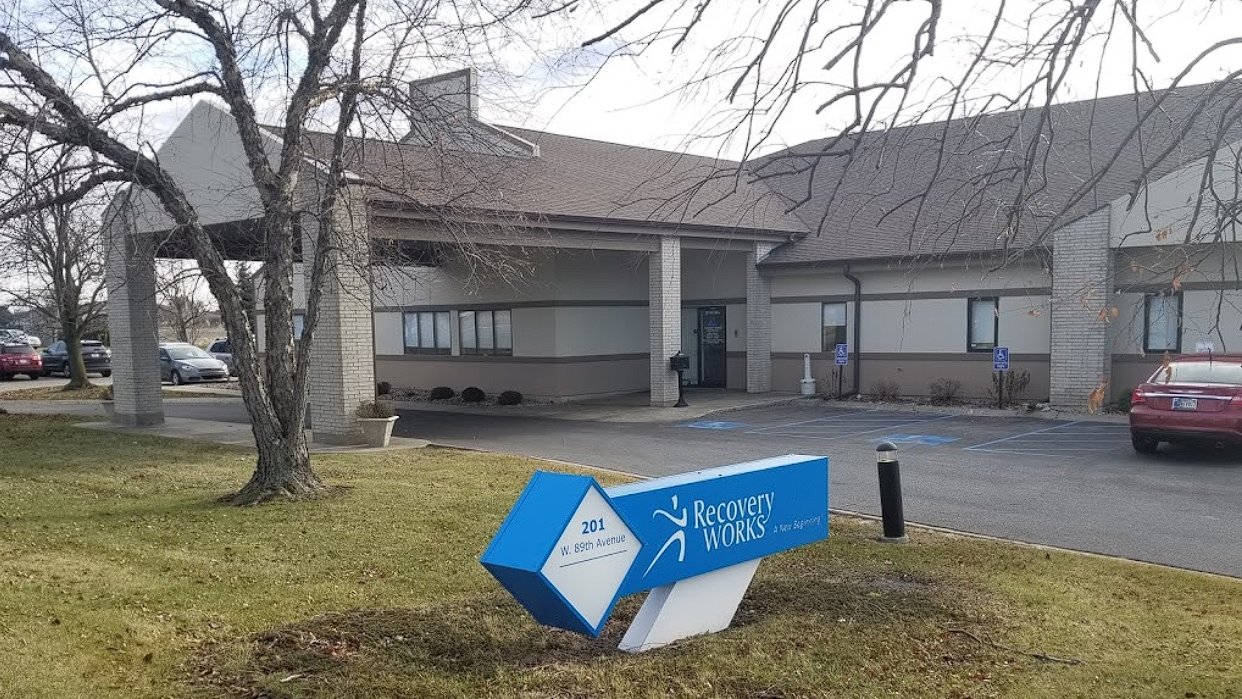
Recovery Works Merrillville
Merrillville, IN
46410

Accredited drug rehab centers available across Loogootee.
Sliding-scale payments, financial aid, low-cost programs, and local nonprofits.
Medicare, Medicaid, TRICARE, plus local private health insurance coverage.
 Filter
| Name | Address | Description | Treatment | Insurance | Thumbnail |
|---|---|---|---|---|---|
Light House Recovery Center | 313 East Main Street | Light House Recovery Center is a substance use treatment provider in Washington, Indiana, offering outpatient care and recovery support services. I've found that the ... more details › | Treatment Programs Insurance Inpatient During inpatient reahb, you live at the treatment facility and participate in several forms of therapy throughout each day. You also engage in forms of psychotherapy, which usually includes group and family therapy as well as individual counseling. Many programs also offer holistic treatment and recovery-focused life skills training. Outpatient Indiana outpatient rehab focuses on providing tools necessary to stay sober. This involves several weekly counseling sessions and involvement in at least one support group, such as NA or AA, for several weeks or months. During that time, you’ll learn how to replace unhealthy habits with healthy ones and prevent relapse. Aftercare The moment your initial treatment ends, aftercare rehab in Indiana begins. Multiple aftercare resources are available to help you confidently re-enter life and maintain sobriety. This support may last for a year or more, providing assistance with counseling, job coaching, budgeting assistance, and other life skills. Sober Living Sober living in Indiana often acts as a bridge between rehab and independent living. In this setting, you’ll start applying the things you learned in rehab to begin living a sober lifestyle. Because the first few months can be your most vulnerable, the sober living house will provide structure to help you maintain sobriety. Intervention Intervention services in Indiana can help you convince your loved one to get the treatment they need. Professionals are available to provide pre-intervention counseling to family members, facilitate an intervention, and assist with the development of a treatment plan. +3 | Treatment Programs Insurance Payment For those entering alcohol or drug rehab in Indiana, self-pay options are a common method of paying for treatment. Examples of private pay include paying in cash, using a credit card, or taking out a personal loan. | |
See Purpose Addiction Treatment Center Indiana | 3237 IN-157 | SEE Purpose Treatment Center is situated in Bloomfield, Indiana, and offers addiction treatment in a residential setting. Among their services are inpatient treatment ... more details › | Treatment Programs Insurance Detox Detox in Indiana involves 24/7 professional care while substances are cleansed from your body. Medications are often given to alleviate withdrawal symptoms during this time. The process varies in length, depending on your history of dependency and the type of drug. Inpatient During inpatient reahb, you live at the treatment facility and participate in several forms of therapy throughout each day. You also engage in forms of psychotherapy, which usually includes group and family therapy as well as individual counseling. Many programs also offer holistic treatment and recovery-focused life skills training. Outpatient Indiana outpatient rehab focuses on providing tools necessary to stay sober. This involves several weekly counseling sessions and involvement in at least one support group, such as NA or AA, for several weeks or months. During that time, you’ll learn how to replace unhealthy habits with healthy ones and prevent relapse. Sober Living Sober living in Indiana often acts as a bridge between rehab and independent living. In this setting, you’ll start applying the things you learned in rehab to begin living a sober lifestyle. Because the first few months can be your most vulnerable, the sober living house will provide structure to help you maintain sobriety. Intervention Intervention services in Indiana can help you convince your loved one to get the treatment they need. Professionals are available to provide pre-intervention counseling to family members, facilitate an intervention, and assist with the development of a treatment plan. +3 | Treatment Programs Insurance Tricare Administered by the Department of Defense, TRICARE offers comprehensive military health insurance plans for active and retired military members and their families. Similar to PPO programs offered by private insurance companies, TRICARE covers multiple levels of care for addiction treatment, including detox, inpatient rehab, and outpatient services. Private If you have private rehab insurance, you may be able to use your coverage to pay for some or all of your treatment in Indiana. Your insurance policy determines the amount of coverage, and you may be left with some out-of-pocket costs like a co-payment, or co-insurance. Check with your insurer for more information. Payment For those entering alcohol or drug rehab in Indiana, self-pay options are a common method of paying for treatment. Examples of private pay include paying in cash, using a credit card, or taking out a personal loan. +1 | |
MedMark Treatment Centers Bloomington | 2100 Liberty Dr | MedMark Treatment Centers Bloomington offers outpatient opioid addiction services for adults in South Central Indiana. You can access flexible care that allows you to ... more details › | Treatment Programs Insurance Detox Detox in Indiana involves 24/7 professional care while substances are cleansed from your body. Medications are often given to alleviate withdrawal symptoms during this time. The process varies in length, depending on your history of dependency and the type of drug. Inpatient During inpatient reahb, you live at the treatment facility and participate in several forms of therapy throughout each day. You also engage in forms of psychotherapy, which usually includes group and family therapy as well as individual counseling. Many programs also offer holistic treatment and recovery-focused life skills training. Outpatient Indiana outpatient rehab focuses on providing tools necessary to stay sober. This involves several weekly counseling sessions and involvement in at least one support group, such as NA or AA, for several weeks or months. During that time, you’ll learn how to replace unhealthy habits with healthy ones and prevent relapse. Sober Living Sober living in Indiana often acts as a bridge between rehab and independent living. In this setting, you’ll start applying the things you learned in rehab to begin living a sober lifestyle. Because the first few months can be your most vulnerable, the sober living house will provide structure to help you maintain sobriety. Intervention Intervention services in Indiana can help you convince your loved one to get the treatment they need. Professionals are available to provide pre-intervention counseling to family members, facilitate an intervention, and assist with the development of a treatment plan. +3 | Treatment Programs Insurance Private If you have private rehab insurance, you may be able to use your coverage to pay for some or all of your treatment in Indiana. Your insurance policy determines the amount of coverage, and you may be left with some out-of-pocket costs like a co-payment, or co-insurance. Check with your insurer for more information. Payment For those entering alcohol or drug rehab in Indiana, self-pay options are a common method of paying for treatment. Examples of private pay include paying in cash, using a credit card, or taking out a personal loan. | |
Groups Recover Together | 508 W 2nd St | Groups Recover Together in Bloomington, Indiana, is an outpatient addiction treatment center specializing in comprehensive care for opioid use disorder. They offer ... more details › | Treatment Programs Insurance Detox Detox in Indiana involves 24/7 professional care while substances are cleansed from your body. Medications are often given to alleviate withdrawal symptoms during this time. The process varies in length, depending on your history of dependency and the type of drug. Inpatient During inpatient reahb, you live at the treatment facility and participate in several forms of therapy throughout each day. You also engage in forms of psychotherapy, which usually includes group and family therapy as well as individual counseling. Many programs also offer holistic treatment and recovery-focused life skills training. Outpatient Indiana outpatient rehab focuses on providing tools necessary to stay sober. This involves several weekly counseling sessions and involvement in at least one support group, such as NA or AA, for several weeks or months. During that time, you’ll learn how to replace unhealthy habits with healthy ones and prevent relapse. Aftercare The moment your initial treatment ends, aftercare rehab in Indiana begins. Multiple aftercare resources are available to help you confidently re-enter life and maintain sobriety. This support may last for a year or more, providing assistance with counseling, job coaching, budgeting assistance, and other life skills. Sober Living Sober living in Indiana often acts as a bridge between rehab and independent living. In this setting, you’ll start applying the things you learned in rehab to begin living a sober lifestyle. Because the first few months can be your most vulnerable, the sober living house will provide structure to help you maintain sobriety. Intervention Intervention services in Indiana can help you convince your loved one to get the treatment they need. Professionals are available to provide pre-intervention counseling to family members, facilitate an intervention, and assist with the development of a treatment plan. +4 | Treatment Programs Insurance Medicaid If you're eligible for Medicaid (called Indiana Medicaid/Hoosier Healthwise), you can use your coverage to help pay for alcohol and drug rehab in Indiana. In most cases, Medicaid will cover most or all of the costs of treatment, including rehab. Financial Aid If you need financial assistance to help pay for alcohol and drug rehab in Indiana, you may be eligible for financial aid. Financial assistance options include grants, scholarships, non-profit programs, personal funding, and health insurance programs to help you manage the expense of substance abuse treatment. Private If you have private rehab insurance, you may be able to use your coverage to pay for some or all of your treatment in Indiana. Your insurance policy determines the amount of coverage, and you may be left with some out-of-pocket costs like a co-payment, or co-insurance. Check with your insurer for more information. Payment For those entering alcohol or drug rehab in Indiana, self-pay options are a common method of paying for treatment. Examples of private pay include paying in cash, using a credit card, or taking out a personal loan. +2 | |
Boca Recovery Center – Bloomington Alcohol & Drug Rehab | 2306 W 3rd St | Boca Recovery Center in Bloomington is an Indiana drug and alcohol rehab center. They ... more details › | Treatment Programs Insurance Detox Detox in Indiana involves 24/7 professional care while substances are cleansed from your body. Medications are often given to alleviate withdrawal symptoms during this time. The process varies in length, depending on your history of dependency and the type of drug. Inpatient During inpatient reahb, you live at the treatment facility and participate in several forms of therapy throughout each day. You also engage in forms of psychotherapy, which usually includes group and family therapy as well as individual counseling. Many programs also offer holistic treatment and recovery-focused life skills training. PHP While in a partial hospitalization program (PHP), you receive treatment similar to an inpatient program, but you’re able to live at home during non-treatment times. PHPs often serve as a step between inpatient and outpatient drug rehab in Indiana. Outpatient Indiana outpatient rehab focuses on providing tools necessary to stay sober. This involves several weekly counseling sessions and involvement in at least one support group, such as NA or AA, for several weeks or months. During that time, you’ll learn how to replace unhealthy habits with healthy ones and prevent relapse. Dual Diagnosis Dual diagnosis in Indiana treats co-occurring disorders, meaning it addresses both your mental health and recovery needs. A multidisciplinary team of psychiatrists and addiction experts work together to ensure all aspects of your mental and physical health are treated. Sober Living Sober living in Indiana often acts as a bridge between rehab and independent living. In this setting, you’ll start applying the things you learned in rehab to begin living a sober lifestyle. Because the first few months can be your most vulnerable, the sober living house will provide structure to help you maintain sobriety. Intervention Intervention services in Indiana can help you convince your loved one to get the treatment they need. Professionals are available to provide pre-intervention counseling to family members, facilitate an intervention, and assist with the development of a treatment plan. +5 | Treatment Programs Insurance Financial Aid If you need financial assistance to help pay for alcohol and drug rehab in Indiana, you may be eligible for financial aid. Financial assistance options include grants, scholarships, non-profit programs, personal funding, and health insurance programs to help you manage the expense of substance abuse treatment. Private If you have private rehab insurance, you may be able to use your coverage to pay for some or all of your treatment in Indiana. Your insurance policy determines the amount of coverage, and you may be left with some out-of-pocket costs like a co-payment, or co-insurance. Check with your insurer for more information. Payment For those entering alcohol or drug rehab in Indiana, self-pay options are a common method of paying for treatment. Examples of private pay include paying in cash, using a credit card, or taking out a personal loan. +1 | |
Indiana Center for Recovery – Alcohol & Drug Rehab Center Bloomington | 1004 West 1st Street | Indiana Center for Recovery is an addiction treatment center in Bloomington, Indiana offering a full continuum of substance use and mental health care at one wooded ... more details › | Treatment Programs Insurance Inpatient During inpatient reahb, you live at the treatment facility and participate in several forms of therapy throughout each day. You also engage in forms of psychotherapy, which usually includes group and family therapy as well as individual counseling. Many programs also offer holistic treatment and recovery-focused life skills training. Outpatient Indiana outpatient rehab focuses on providing tools necessary to stay sober. This involves several weekly counseling sessions and involvement in at least one support group, such as NA or AA, for several weeks or months. During that time, you’ll learn how to replace unhealthy habits with healthy ones and prevent relapse. Dual Diagnosis Dual diagnosis in Indiana treats co-occurring disorders, meaning it addresses both your mental health and recovery needs. A multidisciplinary team of psychiatrists and addiction experts work together to ensure all aspects of your mental and physical health are treated. Aftercare The moment your initial treatment ends, aftercare rehab in Indiana begins. Multiple aftercare resources are available to help you confidently re-enter life and maintain sobriety. This support may last for a year or more, providing assistance with counseling, job coaching, budgeting assistance, and other life skills. Sober Living Sober living in Indiana often acts as a bridge between rehab and independent living. In this setting, you’ll start applying the things you learned in rehab to begin living a sober lifestyle. Because the first few months can be your most vulnerable, the sober living house will provide structure to help you maintain sobriety. Intervention Intervention services in Indiana can help you convince your loved one to get the treatment they need. Professionals are available to provide pre-intervention counseling to family members, facilitate an intervention, and assist with the development of a treatment plan. +4 | Treatment Programs Insurance Tricare Administered by the Department of Defense, TRICARE offers comprehensive military health insurance plans for active and retired military members and their families. Similar to PPO programs offered by private insurance companies, TRICARE covers multiple levels of care for addiction treatment, including detox, inpatient rehab, and outpatient services. Private If you have private rehab insurance, you may be able to use your coverage to pay for some or all of your treatment in Indiana. Your insurance policy determines the amount of coverage, and you may be left with some out-of-pocket costs like a co-payment, or co-insurance. Check with your insurer for more information. Payment For those entering alcohol or drug rehab in Indiana, self-pay options are a common method of paying for treatment. Examples of private pay include paying in cash, using a credit card, or taking out a personal loan. +1 | |
Centerstone | 645 South Rogers Street | You'll find Centerstone in Bloomington, Indiana, near Building Trades Park. This outpatient center welcomes adolescents and adults battling substance abuse and mental ... more details › | Treatment Programs Insurance Detox Detox in Indiana involves 24/7 professional care while substances are cleansed from your body. Medications are often given to alleviate withdrawal symptoms during this time. The process varies in length, depending on your history of dependency and the type of drug. Inpatient During inpatient reahb, you live at the treatment facility and participate in several forms of therapy throughout each day. You also engage in forms of psychotherapy, which usually includes group and family therapy as well as individual counseling. Many programs also offer holistic treatment and recovery-focused life skills training. Outpatient Indiana outpatient rehab focuses on providing tools necessary to stay sober. This involves several weekly counseling sessions and involvement in at least one support group, such as NA or AA, for several weeks or months. During that time, you’ll learn how to replace unhealthy habits with healthy ones and prevent relapse. Dual Diagnosis Dual diagnosis in Indiana treats co-occurring disorders, meaning it addresses both your mental health and recovery needs. A multidisciplinary team of psychiatrists and addiction experts work together to ensure all aspects of your mental and physical health are treated. Aftercare The moment your initial treatment ends, aftercare rehab in Indiana begins. Multiple aftercare resources are available to help you confidently re-enter life and maintain sobriety. This support may last for a year or more, providing assistance with counseling, job coaching, budgeting assistance, and other life skills. Sober Living Sober living in Indiana often acts as a bridge between rehab and independent living. In this setting, you’ll start applying the things you learned in rehab to begin living a sober lifestyle. Because the first few months can be your most vulnerable, the sober living house will provide structure to help you maintain sobriety. Intervention Intervention services in Indiana can help you convince your loved one to get the treatment they need. Professionals are available to provide pre-intervention counseling to family members, facilitate an intervention, and assist with the development of a treatment plan. +5 | Treatment Programs Insurance Medicaid If you're eligible for Medicaid (called Indiana Medicaid/Hoosier Healthwise), you can use your coverage to help pay for alcohol and drug rehab in Indiana. In most cases, Medicaid will cover most or all of the costs of treatment, including rehab. Medicare If eligible, Medicare can be used to cover the cost of alcohol and drug rehab in Indiana. The amount of coverage it provides depends on many things, so it’s a good idea to contact your provider and get specific details. Financial Aid If you need financial assistance to help pay for alcohol and drug rehab in Indiana, you may be eligible for financial aid. Financial assistance options include grants, scholarships, non-profit programs, personal funding, and health insurance programs to help you manage the expense of substance abuse treatment. Employee Employee Assistance Programs (EAP) are a suite of job-based benefits and services designed to support the overall physical, mental, and emotional wellbeing of employees and their families. These often include programs related to addiction education and prevention, medical and mental health assessments, individual and family counseling, and referrals for higher-intensity mental health care or addiction treatment, the costs of which may be covered in whole or in part by EAP benefits. Tricare Administered by the Department of Defense, TRICARE offers comprehensive military health insurance plans for active and retired military members and their families. Similar to PPO programs offered by private insurance companies, TRICARE covers multiple levels of care for addiction treatment, including detox, inpatient rehab, and outpatient services. Private If you have private rehab insurance, you may be able to use your coverage to pay for some or all of your treatment in Indiana. Your insurance policy determines the amount of coverage, and you may be left with some out-of-pocket costs like a co-payment, or co-insurance. Check with your insurer for more information. Payment For those entering alcohol or drug rehab in Indiana, self-pay options are a common method of paying for treatment. Examples of private pay include paying in cash, using a credit card, or taking out a personal loan. +5 | |
CleanSlate Outpatient Addiction Medicine | 203 W 1st St | CleanSlate's Outpatient Addiction Medicine center is a substance use treatment provider for adults. It's out in Bloomington, Indiana. Seminary Park and the local post ... more details › | Treatment Programs Insurance Outpatient Indiana outpatient rehab focuses on providing tools necessary to stay sober. This involves several weekly counseling sessions and involvement in at least one support group, such as NA or AA, for several weeks or months. During that time, you’ll learn how to replace unhealthy habits with healthy ones and prevent relapse. Intervention Intervention services in Indiana can help you convince your loved one to get the treatment they need. Professionals are available to provide pre-intervention counseling to family members, facilitate an intervention, and assist with the development of a treatment plan. | Treatment Programs Insurance Private If you have private rehab insurance, you may be able to use your coverage to pay for some or all of your treatment in Indiana. Your insurance policy determines the amount of coverage, and you may be left with some out-of-pocket costs like a co-payment, or co-insurance. Check with your insurer for more information. Payment For those entering alcohol or drug rehab in Indiana, self-pay options are a common method of paying for treatment. Examples of private pay include paying in cash, using a credit card, or taking out a personal loan. | |
Amethyst House | 645 North Walnut Street | Amethyst House Outpatient in Bloomington, Indiana, provides substance abuse treatment. The outpatient program makes treatment more flexible for those wanting to live ... more details › | Treatment Programs Insurance Inpatient During inpatient reahb, you live at the treatment facility and participate in several forms of therapy throughout each day. You also engage in forms of psychotherapy, which usually includes group and family therapy as well as individual counseling. Many programs also offer holistic treatment and recovery-focused life skills training. Outpatient Indiana outpatient rehab focuses on providing tools necessary to stay sober. This involves several weekly counseling sessions and involvement in at least one support group, such as NA or AA, for several weeks or months. During that time, you’ll learn how to replace unhealthy habits with healthy ones and prevent relapse. Dual Diagnosis Dual diagnosis in Indiana treats co-occurring disorders, meaning it addresses both your mental health and recovery needs. A multidisciplinary team of psychiatrists and addiction experts work together to ensure all aspects of your mental and physical health are treated. Aftercare The moment your initial treatment ends, aftercare rehab in Indiana begins. Multiple aftercare resources are available to help you confidently re-enter life and maintain sobriety. This support may last for a year or more, providing assistance with counseling, job coaching, budgeting assistance, and other life skills. Sober Living Sober living in Indiana often acts as a bridge between rehab and independent living. In this setting, you’ll start applying the things you learned in rehab to begin living a sober lifestyle. Because the first few months can be your most vulnerable, the sober living house will provide structure to help you maintain sobriety. Intervention Intervention services in Indiana can help you convince your loved one to get the treatment they need. Professionals are available to provide pre-intervention counseling to family members, facilitate an intervention, and assist with the development of a treatment plan. +4 | Treatment Programs Insurance Medicaid If you're eligible for Medicaid (called Indiana Medicaid/Hoosier Healthwise), you can use your coverage to help pay for alcohol and drug rehab in Indiana. In most cases, Medicaid will cover most or all of the costs of treatment, including rehab. Financial Aid If you need financial assistance to help pay for alcohol and drug rehab in Indiana, you may be eligible for financial aid. Financial assistance options include grants, scholarships, non-profit programs, personal funding, and health insurance programs to help you manage the expense of substance abuse treatment. Private If you have private rehab insurance, you may be able to use your coverage to pay for some or all of your treatment in Indiana. Your insurance policy determines the amount of coverage, and you may be left with some out-of-pocket costs like a co-payment, or co-insurance. Check with your insurer for more information. Payment For those entering alcohol or drug rehab in Indiana, self-pay options are a common method of paying for treatment. Examples of private pay include paying in cash, using a credit card, or taking out a personal loan. +2 | |
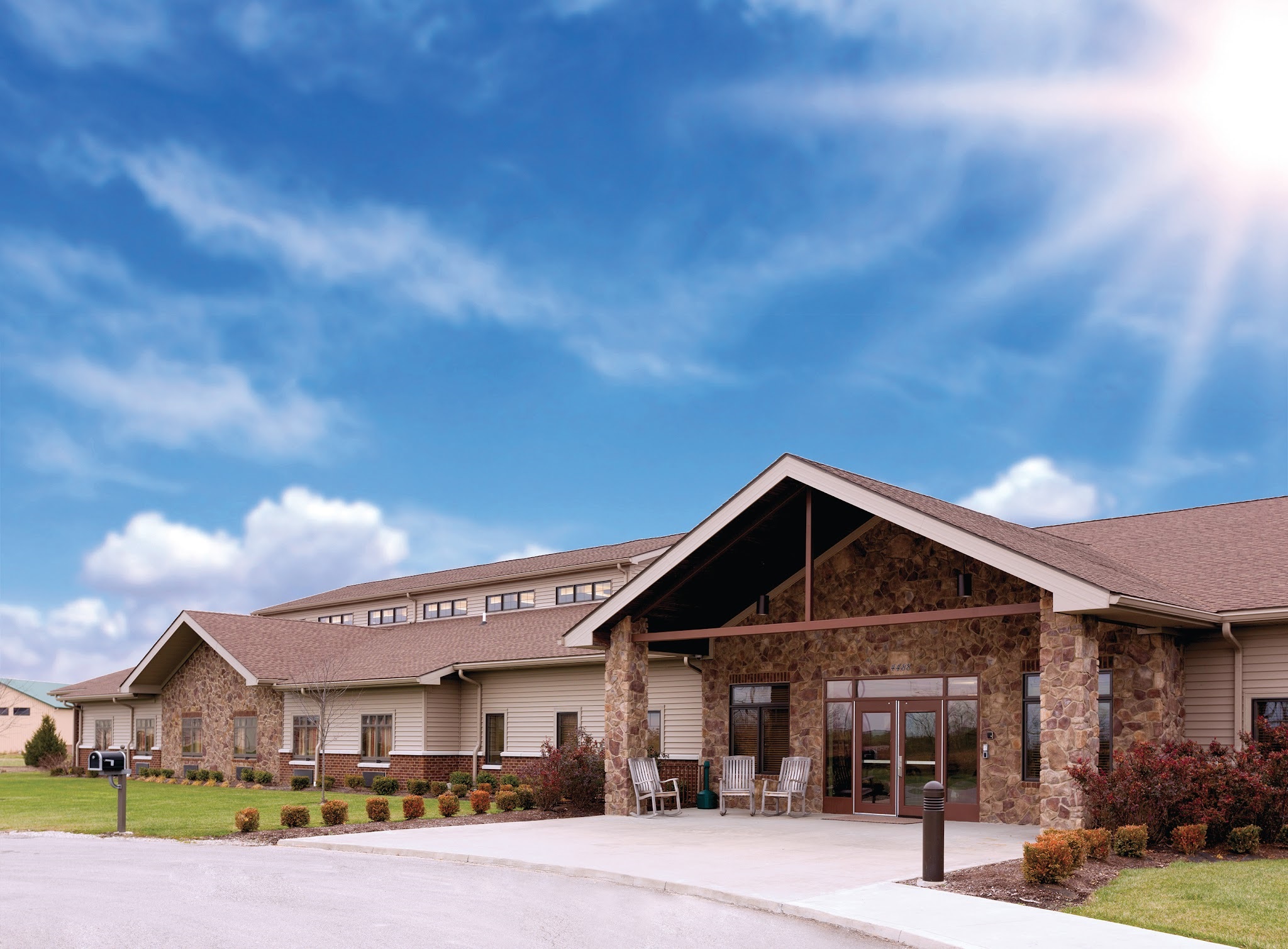
Brentwood Springs | 4488 Roslin Rd | Brentwood Springs is a behavioral health and addiction treatment center in Newburgh, Indiana offering medically supervised detox, inpatient substance use treatment and ... more details › | Treatment Programs Insurance Detox Detox in Indiana involves 24/7 professional care while substances are cleansed from your body. Medications are often given to alleviate withdrawal symptoms during this time. The process varies in length, depending on your history of dependency and the type of drug. Inpatient During inpatient reahb, you live at the treatment facility and participate in several forms of therapy throughout each day. You also engage in forms of psychotherapy, which usually includes group and family therapy as well as individual counseling. Many programs also offer holistic treatment and recovery-focused life skills training. PHP While in a partial hospitalization program (PHP), you receive treatment similar to an inpatient program, but you’re able to live at home during non-treatment times. PHPs often serve as a step between inpatient and outpatient drug rehab in Indiana. Outpatient Indiana outpatient rehab focuses on providing tools necessary to stay sober. This involves several weekly counseling sessions and involvement in at least one support group, such as NA or AA, for several weeks or months. During that time, you’ll learn how to replace unhealthy habits with healthy ones and prevent relapse. Dual Diagnosis Dual diagnosis in Indiana treats co-occurring disorders, meaning it addresses both your mental health and recovery needs. A multidisciplinary team of psychiatrists and addiction experts work together to ensure all aspects of your mental and physical health are treated. Aftercare The moment your initial treatment ends, aftercare rehab in Indiana begins. Multiple aftercare resources are available to help you confidently re-enter life and maintain sobriety. This support may last for a year or more, providing assistance with counseling, job coaching, budgeting assistance, and other life skills. +4 | Treatment Programs Insurance Medicaid If you're eligible for Medicaid (called Indiana Medicaid/Hoosier Healthwise), you can use your coverage to help pay for alcohol and drug rehab in Indiana. In most cases, Medicaid will cover most or all of the costs of treatment, including rehab. Medicare If eligible, Medicare can be used to cover the cost of alcohol and drug rehab in Indiana. The amount of coverage it provides depends on many things, so it’s a good idea to contact your provider and get specific details. Tricare Administered by the Department of Defense, TRICARE offers comprehensive military health insurance plans for active and retired military members and their families. Similar to PPO programs offered by private insurance companies, TRICARE covers multiple levels of care for addiction treatment, including detox, inpatient rehab, and outpatient services. Private If you have private rehab insurance, you may be able to use your coverage to pay for some or all of your treatment in Indiana. Your insurance policy determines the amount of coverage, and you may be left with some out-of-pocket costs like a co-payment, or co-insurance. Check with your insurer for more information. Payment For those entering alcohol or drug rehab in Indiana, self-pay options are a common method of paying for treatment. Examples of private pay include paying in cash, using a credit card, or taking out a personal loan. +3 | |
Adapt Counseling Services | 125 N Weinbach Ave | Based in Evansville, Indiana, ADAPT Counseling Services offers a variety of outpatient mental and behavioral health services, including addiction treatment. Support is ... more details › | Treatment Programs Insurance Detox Detox in Indiana involves 24/7 professional care while substances are cleansed from your body. Medications are often given to alleviate withdrawal symptoms during this time. The process varies in length, depending on your history of dependency and the type of drug. Outpatient Indiana outpatient rehab focuses on providing tools necessary to stay sober. This involves several weekly counseling sessions and involvement in at least one support group, such as NA or AA, for several weeks or months. During that time, you’ll learn how to replace unhealthy habits with healthy ones and prevent relapse. Dual Diagnosis Dual diagnosis in Indiana treats co-occurring disorders, meaning it addresses both your mental health and recovery needs. A multidisciplinary team of psychiatrists and addiction experts work together to ensure all aspects of your mental and physical health are treated. Aftercare The moment your initial treatment ends, aftercare rehab in Indiana begins. Multiple aftercare resources are available to help you confidently re-enter life and maintain sobriety. This support may last for a year or more, providing assistance with counseling, job coaching, budgeting assistance, and other life skills. Intervention Intervention services in Indiana can help you convince your loved one to get the treatment they need. Professionals are available to provide pre-intervention counseling to family members, facilitate an intervention, and assist with the development of a treatment plan. +3 | Treatment Programs Insurance Financial Aid If you need financial assistance to help pay for alcohol and drug rehab in Indiana, you may be eligible for financial aid. Financial assistance options include grants, scholarships, non-profit programs, personal funding, and health insurance programs to help you manage the expense of substance abuse treatment. Tricare Administered by the Department of Defense, TRICARE offers comprehensive military health insurance plans for active and retired military members and their families. Similar to PPO programs offered by private insurance companies, TRICARE covers multiple levels of care for addiction treatment, including detox, inpatient rehab, and outpatient services. Private If you have private rehab insurance, you may be able to use your coverage to pay for some or all of your treatment in Indiana. Your insurance policy determines the amount of coverage, and you may be left with some out-of-pocket costs like a co-payment, or co-insurance. Check with your insurer for more information. Payment For those entering alcohol or drug rehab in Indiana, self-pay options are a common method of paying for treatment. Examples of private pay include paying in cash, using a credit card, or taking out a personal loan. +2 | |
Boyett Treatment Center | 3805 Washington Ave | In Evansville, Indiana, the Boyett Treatment Center is a medication assisted treatment program for adults. This facility specializes in treating all types of ... more details › | Treatment Programs Insurance Detox Detox in Indiana involves 24/7 professional care while substances are cleansed from your body. Medications are often given to alleviate withdrawal symptoms during this time. The process varies in length, depending on your history of dependency and the type of drug. Outpatient Indiana outpatient rehab focuses on providing tools necessary to stay sober. This involves several weekly counseling sessions and involvement in at least one support group, such as NA or AA, for several weeks or months. During that time, you’ll learn how to replace unhealthy habits with healthy ones and prevent relapse. Dual Diagnosis Dual diagnosis in Indiana treats co-occurring disorders, meaning it addresses both your mental health and recovery needs. A multidisciplinary team of psychiatrists and addiction experts work together to ensure all aspects of your mental and physical health are treated. Intervention Intervention services in Indiana can help you convince your loved one to get the treatment they need. Professionals are available to provide pre-intervention counseling to family members, facilitate an intervention, and assist with the development of a treatment plan. +2 | Treatment Programs Insurance Private If you have private rehab insurance, you may be able to use your coverage to pay for some or all of your treatment in Indiana. Your insurance policy determines the amount of coverage, and you may be left with some out-of-pocket costs like a co-payment, or co-insurance. Check with your insurer for more information. Payment For those entering alcohol or drug rehab in Indiana, self-pay options are a common method of paying for treatment. Examples of private pay include paying in cash, using a credit card, or taking out a personal loan. | |
Next Step Foundation, Inc | 619 Washington Ave | Next Step Residential Recovery is an alcohol and drug rehab center in Terre Haute, Indiana that offers treatment for men and women seeking recovery. Their levels of ... more details › | Treatment Programs Insurance Detox Detox in Indiana involves 24/7 professional care while substances are cleansed from your body. Medications are often given to alleviate withdrawal symptoms during this time. The process varies in length, depending on your history of dependency and the type of drug. Inpatient During inpatient reahb, you live at the treatment facility and participate in several forms of therapy throughout each day. You also engage in forms of psychotherapy, which usually includes group and family therapy as well as individual counseling. Many programs also offer holistic treatment and recovery-focused life skills training. Outpatient Indiana outpatient rehab focuses on providing tools necessary to stay sober. This involves several weekly counseling sessions and involvement in at least one support group, such as NA or AA, for several weeks or months. During that time, you’ll learn how to replace unhealthy habits with healthy ones and prevent relapse. Dual Diagnosis Dual diagnosis in Indiana treats co-occurring disorders, meaning it addresses both your mental health and recovery needs. A multidisciplinary team of psychiatrists and addiction experts work together to ensure all aspects of your mental and physical health are treated. Sober Living Sober living in Indiana often acts as a bridge between rehab and independent living. In this setting, you’ll start applying the things you learned in rehab to begin living a sober lifestyle. Because the first few months can be your most vulnerable, the sober living house will provide structure to help you maintain sobriety. Intervention Intervention services in Indiana can help you convince your loved one to get the treatment they need. Professionals are available to provide pre-intervention counseling to family members, facilitate an intervention, and assist with the development of a treatment plan. +4 | Treatment Programs Insurance Private If you have private rehab insurance, you may be able to use your coverage to pay for some or all of your treatment in Indiana. Your insurance policy determines the amount of coverage, and you may be left with some out-of-pocket costs like a co-payment, or co-insurance. Check with your insurer for more information. Payment For those entering alcohol or drug rehab in Indiana, self-pay options are a common method of paying for treatment. Examples of private pay include paying in cash, using a credit card, or taking out a personal loan. | |
Now Counseling | 320 NW Martin Luther King Jr Blvd | NOW Counseling is also known as New Opportunities for Wellness Counseling Services. They're an addiction treatment center in Evansville, Indiana. They offer ... more details › | Treatment Programs Insurance Detox Detox in Indiana involves 24/7 professional care while substances are cleansed from your body. Medications are often given to alleviate withdrawal symptoms during this time. The process varies in length, depending on your history of dependency and the type of drug. Inpatient During inpatient reahb, you live at the treatment facility and participate in several forms of therapy throughout each day. You also engage in forms of psychotherapy, which usually includes group and family therapy as well as individual counseling. Many programs also offer holistic treatment and recovery-focused life skills training. PHP While in a partial hospitalization program (PHP), you receive treatment similar to an inpatient program, but you’re able to live at home during non-treatment times. PHPs often serve as a step between inpatient and outpatient drug rehab in Indiana. Outpatient Indiana outpatient rehab focuses on providing tools necessary to stay sober. This involves several weekly counseling sessions and involvement in at least one support group, such as NA or AA, for several weeks or months. During that time, you’ll learn how to replace unhealthy habits with healthy ones and prevent relapse. Sober Living Sober living in Indiana often acts as a bridge between rehab and independent living. In this setting, you’ll start applying the things you learned in rehab to begin living a sober lifestyle. Because the first few months can be your most vulnerable, the sober living house will provide structure to help you maintain sobriety. +3 | Treatment Programs Insurance Medicaid If you're eligible for Medicaid (called Indiana Medicaid/Hoosier Healthwise), you can use your coverage to help pay for alcohol and drug rehab in Indiana. In most cases, Medicaid will cover most or all of the costs of treatment, including rehab. Medicare If eligible, Medicare can be used to cover the cost of alcohol and drug rehab in Indiana. The amount of coverage it provides depends on many things, so it’s a good idea to contact your provider and get specific details. Private If you have private rehab insurance, you may be able to use your coverage to pay for some or all of your treatment in Indiana. Your insurance policy determines the amount of coverage, and you may be left with some out-of-pocket costs like a co-payment, or co-insurance. Check with your insurer for more information. Payment For those entering alcohol or drug rehab in Indiana, self-pay options are a common method of paying for treatment. Examples of private pay include paying in cash, using a credit card, or taking out a personal loan. +2 | |
Evansville Comprehensive Treatment Center | 1510 W Franklin St | Evansville Comprehensive Treatment Center is an opioid use disorder treatment provider helping people 18 and older in Evansville, Indiana. The program combines ... more details › | Treatment Programs Insurance Detox Detox in Indiana involves 24/7 professional care while substances are cleansed from your body. Medications are often given to alleviate withdrawal symptoms during this time. The process varies in length, depending on your history of dependency and the type of drug. Inpatient During inpatient reahb, you live at the treatment facility and participate in several forms of therapy throughout each day. You also engage in forms of psychotherapy, which usually includes group and family therapy as well as individual counseling. Many programs also offer holistic treatment and recovery-focused life skills training. Outpatient Indiana outpatient rehab focuses on providing tools necessary to stay sober. This involves several weekly counseling sessions and involvement in at least one support group, such as NA or AA, for several weeks or months. During that time, you’ll learn how to replace unhealthy habits with healthy ones and prevent relapse. +1 | Treatment Programs Insurance Medicaid If you're eligible for Medicaid (called Indiana Medicaid/Hoosier Healthwise), you can use your coverage to help pay for alcohol and drug rehab in Indiana. In most cases, Medicaid will cover most or all of the costs of treatment, including rehab. Medicare If eligible, Medicare can be used to cover the cost of alcohol and drug rehab in Indiana. The amount of coverage it provides depends on many things, so it’s a good idea to contact your provider and get specific details. Tricare Administered by the Department of Defense, TRICARE offers comprehensive military health insurance plans for active and retired military members and their families. Similar to PPO programs offered by private insurance companies, TRICARE covers multiple levels of care for addiction treatment, including detox, inpatient rehab, and outpatient services. Private If you have private rehab insurance, you may be able to use your coverage to pay for some or all of your treatment in Indiana. Your insurance policy determines the amount of coverage, and you may be left with some out-of-pocket costs like a co-payment, or co-insurance. Check with your insurer for more information. Payment For those entering alcohol or drug rehab in Indiana, self-pay options are a common method of paying for treatment. Examples of private pay include paying in cash, using a credit card, or taking out a personal loan. +3 |
 800-783-0593
 Sponsored
