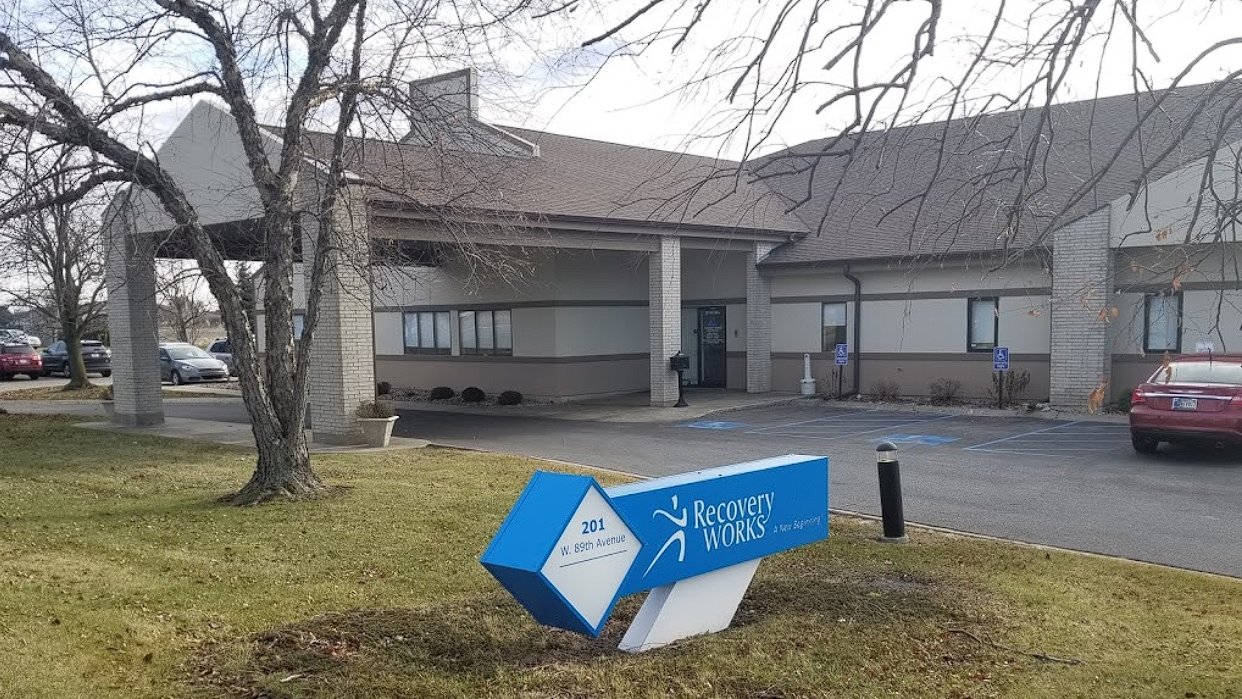
Recovery Works Merrillville
Merrillville, IN
46410

Accredited drug rehab centers available across Laporte.
Sliding-scale payments, financial aid, low-cost programs, and local nonprofits.
Medicare, Medicaid, TRICARE, plus local private health insurance coverage.
 Filter
| Name | Address | Description | Treatment | Insurance | Thumbnail |
|---|---|---|---|---|---|
Groups Recover Together | 614 Andrew Ave | Groups Recover Together is in Laporte, Indiana. They provide substance abuse treatment. Their goal is to offer quality addiction services for those fighting opioid ... more details › | Treatment Programs Insurance Detox Detox in Indiana involves 24/7 professional care while substances are cleansed from your body. Medications are often given to alleviate withdrawal symptoms during this time. The process varies in length, depending on your history of dependency and the type of drug. Inpatient During inpatient reahb, you live at the treatment facility and participate in several forms of therapy throughout each day. You also engage in forms of psychotherapy, which usually includes group and family therapy as well as individual counseling. Many programs also offer holistic treatment and recovery-focused life skills training. Outpatient Indiana outpatient rehab focuses on providing tools necessary to stay sober. This involves several weekly counseling sessions and involvement in at least one support group, such as NA or AA, for several weeks or months. During that time, you’ll learn how to replace unhealthy habits with healthy ones and prevent relapse. Dual Diagnosis Dual diagnosis in Indiana treats co-occurring disorders, meaning it addresses both your mental health and recovery needs. A multidisciplinary team of psychiatrists and addiction experts work together to ensure all aspects of your mental and physical health are treated. Intervention Intervention services in Indiana can help you convince your loved one to get the treatment they need. Professionals are available to provide pre-intervention counseling to family members, facilitate an intervention, and assist with the development of a treatment plan. +3 | Treatment Programs Insurance Medicaid If you're eligible for Medicaid (called Indiana Medicaid/Hoosier Healthwise), you can use your coverage to help pay for alcohol and drug rehab in Indiana. In most cases, Medicaid will cover most or all of the costs of treatment, including rehab. Private If you have private rehab insurance, you may be able to use your coverage to pay for some or all of your treatment in Indiana. Your insurance policy determines the amount of coverage, and you may be left with some out-of-pocket costs like a co-payment, or co-insurance. Check with your insurer for more information. Payment For those entering alcohol or drug rehab in Indiana, self-pay options are a common method of paying for treatment. Examples of private pay include paying in cash, using a credit card, or taking out a personal loan. +1 | |
Swanson Center LaPorte | 1230 West State Road 2 | LaPorte in Indiana features the Swanson Center LaPorte. This outpatient treatment center provides substance abuse and mental health treatment for adults and teens. You ... more details › | Treatment Programs Insurance Detox Detox in Indiana involves 24/7 professional care while substances are cleansed from your body. Medications are often given to alleviate withdrawal symptoms during this time. The process varies in length, depending on your history of dependency and the type of drug. Outpatient Indiana outpatient rehab focuses on providing tools necessary to stay sober. This involves several weekly counseling sessions and involvement in at least one support group, such as NA or AA, for several weeks or months. During that time, you’ll learn how to replace unhealthy habits with healthy ones and prevent relapse. Aftercare The moment your initial treatment ends, aftercare rehab in Indiana begins. Multiple aftercare resources are available to help you confidently re-enter life and maintain sobriety. This support may last for a year or more, providing assistance with counseling, job coaching, budgeting assistance, and other life skills. Sober Living Sober living in Indiana often acts as a bridge between rehab and independent living. In this setting, you’ll start applying the things you learned in rehab to begin living a sober lifestyle. Because the first few months can be your most vulnerable, the sober living house will provide structure to help you maintain sobriety. +2 | Treatment Programs Insurance Medicaid If you're eligible for Medicaid (called Indiana Medicaid/Hoosier Healthwise), you can use your coverage to help pay for alcohol and drug rehab in Indiana. In most cases, Medicaid will cover most or all of the costs of treatment, including rehab. Medicare If eligible, Medicare can be used to cover the cost of alcohol and drug rehab in Indiana. The amount of coverage it provides depends on many things, so it’s a good idea to contact your provider and get specific details. Financial Aid If you need financial assistance to help pay for alcohol and drug rehab in Indiana, you may be eligible for financial aid. Financial assistance options include grants, scholarships, non-profit programs, personal funding, and health insurance programs to help you manage the expense of substance abuse treatment. Tricare Administered by the Department of Defense, TRICARE offers comprehensive military health insurance plans for active and retired military members and their families. Similar to PPO programs offered by private insurance companies, TRICARE covers multiple levels of care for addiction treatment, including detox, inpatient rehab, and outpatient services. Private If you have private rehab insurance, you may be able to use your coverage to pay for some or all of your treatment in Indiana. Your insurance policy determines the amount of coverage, and you may be left with some out-of-pocket costs like a co-payment, or co-insurance. Check with your insurer for more information. Payment For those entering alcohol or drug rehab in Indiana, self-pay options are a common method of paying for treatment. Examples of private pay include paying in cash, using a credit card, or taking out a personal loan. +4 | |
Groups Recover Together | 614 Andrew Ave | Groups Recover Together is in Laporte, Indiana. They provide substance abuse treatment. Their goal is to offer quality addiction services for those fighting opioid ... more details › | Treatment Programs Insurance Detox Detox in Indiana involves 24/7 professional care while substances are cleansed from your body. Medications are often given to alleviate withdrawal symptoms during this time. The process varies in length, depending on your history of dependency and the type of drug. Inpatient During inpatient reahb, you live at the treatment facility and participate in several forms of therapy throughout each day. You also engage in forms of psychotherapy, which usually includes group and family therapy as well as individual counseling. Many programs also offer holistic treatment and recovery-focused life skills training. Outpatient Indiana outpatient rehab focuses on providing tools necessary to stay sober. This involves several weekly counseling sessions and involvement in at least one support group, such as NA or AA, for several weeks or months. During that time, you’ll learn how to replace unhealthy habits with healthy ones and prevent relapse. Dual Diagnosis Dual diagnosis in Indiana treats co-occurring disorders, meaning it addresses both your mental health and recovery needs. A multidisciplinary team of psychiatrists and addiction experts work together to ensure all aspects of your mental and physical health are treated. Intervention Intervention services in Indiana can help you convince your loved one to get the treatment they need. Professionals are available to provide pre-intervention counseling to family members, facilitate an intervention, and assist with the development of a treatment plan. +3 | Treatment Programs Insurance Medicaid If you're eligible for Medicaid (called Indiana Medicaid/Hoosier Healthwise), you can use your coverage to help pay for alcohol and drug rehab in Indiana. In most cases, Medicaid will cover most or all of the costs of treatment, including rehab. Private If you have private rehab insurance, you may be able to use your coverage to pay for some or all of your treatment in Indiana. Your insurance policy determines the amount of coverage, and you may be left with some out-of-pocket costs like a co-payment, or co-insurance. Check with your insurer for more information. Payment For those entering alcohol or drug rehab in Indiana, self-pay options are a common method of paying for treatment. Examples of private pay include paying in cash, using a credit card, or taking out a personal loan. +1 | |
Alliance MD | 10176 W 400 N c | Alliance MD in Michigan Cit, Indiana is one of several outpatient clinics that treat substance abuse in the state. They provide medication assisted treatment to help ... more details › | Treatment Programs Insurance Detox Detox in Indiana involves 24/7 professional care while substances are cleansed from your body. Medications are often given to alleviate withdrawal symptoms during this time. The process varies in length, depending on your history of dependency and the type of drug. Inpatient During inpatient reahb, you live at the treatment facility and participate in several forms of therapy throughout each day. You also engage in forms of psychotherapy, which usually includes group and family therapy as well as individual counseling. Many programs also offer holistic treatment and recovery-focused life skills training. Outpatient Indiana outpatient rehab focuses on providing tools necessary to stay sober. This involves several weekly counseling sessions and involvement in at least one support group, such as NA or AA, for several weeks or months. During that time, you’ll learn how to replace unhealthy habits with healthy ones and prevent relapse. +1 | Treatment Programs Insurance Private If you have private rehab insurance, you may be able to use your coverage to pay for some or all of your treatment in Indiana. Your insurance policy determines the amount of coverage, and you may be left with some out-of-pocket costs like a co-payment, or co-insurance. Check with your insurer for more information. Payment For those entering alcohol or drug rehab in Indiana, self-pay options are a common method of paying for treatment. Examples of private pay include paying in cash, using a credit card, or taking out a personal loan. | |
Parkdale Center: Indiana Drug and Alcohol Rehab | 350 Indian Boundary Road | Parkdale Center in Chesterton, Indiana, offers substance abuse treatment for adult professionals. They cater to highly educated individuals in stressful careers that ... more details › | Treatment Programs Insurance Inpatient During inpatient reahb, you live at the treatment facility and participate in several forms of therapy throughout each day. You also engage in forms of psychotherapy, which usually includes group and family therapy as well as individual counseling. Many programs also offer holistic treatment and recovery-focused life skills training. PHP While in a partial hospitalization program (PHP), you receive treatment similar to an inpatient program, but you’re able to live at home during non-treatment times. PHPs often serve as a step between inpatient and outpatient drug rehab in Indiana. Outpatient Indiana outpatient rehab focuses on providing tools necessary to stay sober. This involves several weekly counseling sessions and involvement in at least one support group, such as NA or AA, for several weeks or months. During that time, you’ll learn how to replace unhealthy habits with healthy ones and prevent relapse. Dual Diagnosis Dual diagnosis in Indiana treats co-occurring disorders, meaning it addresses both your mental health and recovery needs. A multidisciplinary team of psychiatrists and addiction experts work together to ensure all aspects of your mental and physical health are treated. Aftercare The moment your initial treatment ends, aftercare rehab in Indiana begins. Multiple aftercare resources are available to help you confidently re-enter life and maintain sobriety. This support may last for a year or more, providing assistance with counseling, job coaching, budgeting assistance, and other life skills. +3 | Treatment Programs Insurance Financial Aid Rather than pay for an entire treatment program at once, you can pay for substance abuse counseling per session. Rates for therapy sessions vary by treatment provider and generally range from $130-$200. Typical forms of payment accepted include insurance, credit, debit, and cash. Private If you have private rehab insurance, you may be able to use your coverage to pay for some or all of your treatment in Indiana. Your insurance policy determines the amount of coverage, and you may be left with some out-of-pocket costs like a co-payment, or co-insurance. Check with your insurer for more information. Payment For those entering alcohol or drug rehab in Indiana, self-pay options are a common method of paying for treatment. Examples of private pay include paying in cash, using a credit card, or taking out a personal loan. +1 | |
Porter-Starke Services | 601 Wall Street | In Valparaiso, Indiana, the go-to for addiction recovery is Porter Starke Services Valparaiso. This outpatient treatment center offers treatment for mental illness and ... more details › | Treatment Programs Insurance Detox Detox in Indiana involves 24/7 professional care while substances are cleansed from your body. Medications are often given to alleviate withdrawal symptoms during this time. The process varies in length, depending on your history of dependency and the type of drug. Inpatient During inpatient reahb, you live at the treatment facility and participate in several forms of therapy throughout each day. You also engage in forms of psychotherapy, which usually includes group and family therapy as well as individual counseling. Many programs also offer holistic treatment and recovery-focused life skills training. Outpatient Indiana outpatient rehab focuses on providing tools necessary to stay sober. This involves several weekly counseling sessions and involvement in at least one support group, such as NA or AA, for several weeks or months. During that time, you’ll learn how to replace unhealthy habits with healthy ones and prevent relapse. Dual Diagnosis Dual diagnosis in Indiana treats co-occurring disorders, meaning it addresses both your mental health and recovery needs. A multidisciplinary team of psychiatrists and addiction experts work together to ensure all aspects of your mental and physical health are treated. +2 | Treatment Programs Insurance Medicaid If you're eligible for Medicaid (called Indiana Medicaid/Hoosier Healthwise), you can use your coverage to help pay for alcohol and drug rehab in Indiana. In most cases, Medicaid will cover most or all of the costs of treatment, including rehab. Medicare If eligible, Medicare can be used to cover the cost of alcohol and drug rehab in Indiana. The amount of coverage it provides depends on many things, so it’s a good idea to contact your provider and get specific details. Financial Aid If you need help paying for drug rehab in Indiana but can't pay the full amount, you may be eligible for a sliding scale payment plan. Eligible clients are charged based upon their individual needs and what they can afford to repay. You must complete an application and provide supporting financial documentation in order to qualify for this program. Tricare Administered by the Department of Defense, TRICARE offers comprehensive military health insurance plans for active and retired military members and their families. Similar to PPO programs offered by private insurance companies, TRICARE covers multiple levels of care for addiction treatment, including detox, inpatient rehab, and outpatient services. Private If you have private rehab insurance, you may be able to use your coverage to pay for some or all of your treatment in Indiana. Your insurance policy determines the amount of coverage, and you may be left with some out-of-pocket costs like a co-payment, or co-insurance. Check with your insurer for more information. Payment For those entering alcohol or drug rehab in Indiana, self-pay options are a common method of paying for treatment. Examples of private pay include paying in cash, using a credit card, or taking out a personal loan. +4 | |
Victory Clinic Services | 4218 W Western Ave | Victory Clinic Services is a medication-assisted treatment center in South Bend, Indiana, providing specialized outpatient care for adults living with opioid use ... more details › | Treatment Programs Insurance Detox Detox in Indiana involves 24/7 professional care while substances are cleansed from your body. Medications are often given to alleviate withdrawal symptoms during this time. The process varies in length, depending on your history of dependency and the type of drug. Outpatient Indiana outpatient rehab focuses on providing tools necessary to stay sober. This involves several weekly counseling sessions and involvement in at least one support group, such as NA or AA, for several weeks or months. During that time, you’ll learn how to replace unhealthy habits with healthy ones and prevent relapse. Dual Diagnosis Dual diagnosis in Indiana treats co-occurring disorders, meaning it addresses both your mental health and recovery needs. A multidisciplinary team of psychiatrists and addiction experts work together to ensure all aspects of your mental and physical health are treated. Intervention Intervention services in Indiana can help you convince your loved one to get the treatment they need. Professionals are available to provide pre-intervention counseling to family members, facilitate an intervention, and assist with the development of a treatment plan. +2 | Treatment Programs Insurance Medicaid If you're eligible for Medicaid (called Indiana Medicaid/Hoosier Healthwise), you can use your coverage to help pay for alcohol and drug rehab in Indiana. In most cases, Medicaid will cover most or all of the costs of treatment, including rehab. Medicare If eligible, Medicare can be used to cover the cost of alcohol and drug rehab in Indiana. The amount of coverage it provides depends on many things, so it’s a good idea to contact your provider and get specific details. Tricare Administered by the Department of Defense, TRICARE offers comprehensive military health insurance plans for active and retired military members and their families. Similar to PPO programs offered by private insurance companies, TRICARE covers multiple levels of care for addiction treatment, including detox, inpatient rehab, and outpatient services. Private If you have private rehab insurance, you may be able to use your coverage to pay for some or all of your treatment in Indiana. Your insurance policy determines the amount of coverage, and you may be left with some out-of-pocket costs like a co-payment, or co-insurance. Check with your insurer for more information. Payment For those entering alcohol or drug rehab in Indiana, self-pay options are a common method of paying for treatment. Examples of private pay include paying in cash, using a credit card, or taking out a personal loan. +3 | |
Imani & Unidad Inc | 234 Chapin St | Proud to serve the marginalized communities of St. Joseph and Elkhart counties, Imani Unidad offers outpatient services related to substance use and mental health ... more details › | Treatment Programs Insurance Detox Detox in Indiana involves 24/7 professional care while substances are cleansed from your body. Medications are often given to alleviate withdrawal symptoms during this time. The process varies in length, depending on your history of dependency and the type of drug. Outpatient Indiana outpatient rehab focuses on providing tools necessary to stay sober. This involves several weekly counseling sessions and involvement in at least one support group, such as NA or AA, for several weeks or months. During that time, you’ll learn how to replace unhealthy habits with healthy ones and prevent relapse. Dual Diagnosis Dual diagnosis in Indiana treats co-occurring disorders, meaning it addresses both your mental health and recovery needs. A multidisciplinary team of psychiatrists and addiction experts work together to ensure all aspects of your mental and physical health are treated. Intervention Intervention services in Indiana can help you convince your loved one to get the treatment they need. Professionals are available to provide pre-intervention counseling to family members, facilitate an intervention, and assist with the development of a treatment plan. +2 | Treatment Programs Insurance Private If you have private rehab insurance, you may be able to use your coverage to pay for some or all of your treatment in Indiana. Your insurance policy determines the amount of coverage, and you may be left with some out-of-pocket costs like a co-payment, or co-insurance. Check with your insurer for more information. Payment For those entering alcohol or drug rehab in Indiana, self-pay options are a common method of paying for treatment. Examples of private pay include paying in cash, using a credit card, or taking out a personal loan. | |
Life Treatment Centers, Inc. | 1402 South Michigan Street, South Bend, IN 46613 | Life Treatment Centers in South Bend, Indiana, offer substance abuse treatment. They have residential and outpatient programs available depending on the individual’s ... more details › | Treatment Programs Insurance Detox Detox in Indiana involves 24/7 professional care while substances are cleansed from your body. Medications are often given to alleviate withdrawal symptoms during this time. The process varies in length, depending on your history of dependency and the type of drug. Inpatient During inpatient reahb, you live at the treatment facility and participate in several forms of therapy throughout each day. You also engage in forms of psychotherapy, which usually includes group and family therapy as well as individual counseling. Many programs also offer holistic treatment and recovery-focused life skills training. Outpatient Indiana outpatient rehab focuses on providing tools necessary to stay sober. This involves several weekly counseling sessions and involvement in at least one support group, such as NA or AA, for several weeks or months. During that time, you’ll learn how to replace unhealthy habits with healthy ones and prevent relapse. Dual Diagnosis Dual diagnosis in Indiana treats co-occurring disorders, meaning it addresses both your mental health and recovery needs. A multidisciplinary team of psychiatrists and addiction experts work together to ensure all aspects of your mental and physical health are treated. Aftercare The moment your initial treatment ends, aftercare rehab in Indiana begins. Multiple aftercare resources are available to help you confidently re-enter life and maintain sobriety. This support may last for a year or more, providing assistance with counseling, job coaching, budgeting assistance, and other life skills. Sober Living Sober living in Indiana often acts as a bridge between rehab and independent living. In this setting, you’ll start applying the things you learned in rehab to begin living a sober lifestyle. Because the first few months can be your most vulnerable, the sober living house will provide structure to help you maintain sobriety. Intervention Intervention services in Indiana can help you convince your loved one to get the treatment they need. Professionals are available to provide pre-intervention counseling to family members, facilitate an intervention, and assist with the development of a treatment plan. +5 | Treatment Programs Insurance Medicaid If you're eligible for Medicaid (called Indiana Medicaid/Hoosier Healthwise), you can use your coverage to help pay for alcohol and drug rehab in Indiana. In most cases, Medicaid will cover most or all of the costs of treatment, including rehab. Financial Aid If you need financial assistance to help pay for alcohol and drug rehab in Indiana, you may be eligible for financial aid. Financial assistance options include grants, scholarships, non-profit programs, personal funding, and health insurance programs to help you manage the expense of substance abuse treatment. Tricare Administered by the Department of Defense, TRICARE offers comprehensive military health insurance plans for active and retired military members and their families. Similar to PPO programs offered by private insurance companies, TRICARE covers multiple levels of care for addiction treatment, including detox, inpatient rehab, and outpatient services. Private If you have private rehab insurance, you may be able to use your coverage to pay for some or all of your treatment in Indiana. Your insurance policy determines the amount of coverage, and you may be left with some out-of-pocket costs like a co-payment, or co-insurance. Check with your insurer for more information. Payment For those entering alcohol or drug rehab in Indiana, self-pay options are a common method of paying for treatment. Examples of private pay include paying in cash, using a credit card, or taking out a personal loan. +3 | |
Oxford House Emyla | 631 N Lafayette Blvd | Council Oak located in South Bend, Indianapolis, is part of Oxford House. Across the globe, Oxford House provides low cost, self sufficient housing for people who are ... more details › | Treatment Programs Insurance Detox Detox in Indiana involves 24/7 professional care while substances are cleansed from your body. Medications are often given to alleviate withdrawal symptoms during this time. The process varies in length, depending on your history of dependency and the type of drug. Dual Diagnosis Dual diagnosis in Indiana treats co-occurring disorders, meaning it addresses both your mental health and recovery needs. A multidisciplinary team of psychiatrists and addiction experts work together to ensure all aspects of your mental and physical health are treated. Sober Living Sober living in Indiana often acts as a bridge between rehab and independent living. In this setting, you’ll start applying the things you learned in rehab to begin living a sober lifestyle. Because the first few months can be your most vulnerable, the sober living house will provide structure to help you maintain sobriety. +1 | Treatment Programs Insurance Payment For those entering alcohol or drug rehab in Indiana, self-pay options are a common method of paying for treatment. Examples of private pay include paying in cash, using a credit card, or taking out a personal loan. | |
The Upper Room Recovery Community | 333 N Main St | For faith based sober living in South Bend, Indiana, you can try The Upper Room Recovery Community. You’ll usually go to a home like this after finishing an ... more details › | Treatment Programs Insurance Detox Detox in Indiana involves 24/7 professional care while substances are cleansed from your body. Medications are often given to alleviate withdrawal symptoms during this time. The process varies in length, depending on your history of dependency and the type of drug. Outpatient Indiana outpatient rehab focuses on providing tools necessary to stay sober. This involves several weekly counseling sessions and involvement in at least one support group, such as NA or AA, for several weeks or months. During that time, you’ll learn how to replace unhealthy habits with healthy ones and prevent relapse. Dual Diagnosis Dual diagnosis in Indiana treats co-occurring disorders, meaning it addresses both your mental health and recovery needs. A multidisciplinary team of psychiatrists and addiction experts work together to ensure all aspects of your mental and physical health are treated. Sober Living Sober living in Indiana often acts as a bridge between rehab and independent living. In this setting, you’ll start applying the things you learned in rehab to begin living a sober lifestyle. Because the first few months can be your most vulnerable, the sober living house will provide structure to help you maintain sobriety. Intervention Intervention services in Indiana can help you convince your loved one to get the treatment they need. Professionals are available to provide pre-intervention counseling to family members, facilitate an intervention, and assist with the development of a treatment plan. +3 | Treatment Programs Insurance Private If you have private rehab insurance, you may be able to use your coverage to pay for some or all of your treatment in Indiana. Your insurance policy determines the amount of coverage, and you may be left with some out-of-pocket costs like a co-payment, or co-insurance. Check with your insurer for more information. Payment For those entering alcohol or drug rehab in Indiana, self-pay options are a common method of paying for treatment. Examples of private pay include paying in cash, using a credit card, or taking out a personal loan. | |
YWCA North Central Indiana | 1102 Fellows Street, South Bend, IN 46601 | YWCA North Central Indiana South Bend in South Bend, Indiana, is a community care facility that serves women and mothers who are seeking mental, physical and spiritual ... more details › | Treatment Programs Insurance Detox Detox in Indiana involves 24/7 professional care while substances are cleansed from your body. Medications are often given to alleviate withdrawal symptoms during this time. The process varies in length, depending on your history of dependency and the type of drug. Inpatient During inpatient reahb, you live at the treatment facility and participate in several forms of therapy throughout each day. You also engage in forms of psychotherapy, which usually includes group and family therapy as well as individual counseling. Many programs also offer holistic treatment and recovery-focused life skills training. Outpatient Indiana outpatient rehab focuses on providing tools necessary to stay sober. This involves several weekly counseling sessions and involvement in at least one support group, such as NA or AA, for several weeks or months. During that time, you’ll learn how to replace unhealthy habits with healthy ones and prevent relapse. Dual Diagnosis Dual diagnosis in Indiana treats co-occurring disorders, meaning it addresses both your mental health and recovery needs. A multidisciplinary team of psychiatrists and addiction experts work together to ensure all aspects of your mental and physical health are treated. Aftercare The moment your initial treatment ends, aftercare rehab in Indiana begins. Multiple aftercare resources are available to help you confidently re-enter life and maintain sobriety. This support may last for a year or more, providing assistance with counseling, job coaching, budgeting assistance, and other life skills. Sober Living Sober living in Indiana often acts as a bridge between rehab and independent living. In this setting, you’ll start applying the things you learned in rehab to begin living a sober lifestyle. Because the first few months can be your most vulnerable, the sober living house will provide structure to help you maintain sobriety. Intervention Intervention services in Indiana can help you convince your loved one to get the treatment they need. Professionals are available to provide pre-intervention counseling to family members, facilitate an intervention, and assist with the development of a treatment plan. +5 | Treatment Programs Insurance Medicaid If you're eligible for Medicaid (called Indiana Medicaid/Hoosier Healthwise), you can use your coverage to help pay for alcohol and drug rehab in Indiana. In most cases, Medicaid will cover most or all of the costs of treatment, including rehab. Medicare If eligible, Medicare can be used to cover the cost of alcohol and drug rehab in Indiana. The amount of coverage it provides depends on many things, so it’s a good idea to contact your provider and get specific details. Private If you have private rehab insurance, you may be able to use your coverage to pay for some or all of your treatment in Indiana. Your insurance policy determines the amount of coverage, and you may be left with some out-of-pocket costs like a co-payment, or co-insurance. Check with your insurer for more information. Payment For those entering alcohol or drug rehab in Indiana, self-pay options are a common method of paying for treatment. Examples of private pay include paying in cash, using a credit card, or taking out a personal loan. +2 | |
Dockside Services Inc | 2625 S Michigan St | Treatment Programs Insurance Detox Detox in Indiana involves 24/7 professional care while substances are cleansed from your body. Medications are often given to alleviate withdrawal symptoms during this time. The process varies in length, depending on your history of dependency and the type of drug. Inpatient During inpatient reahb, you live at the treatment facility and participate in several forms of therapy throughout each day. You also engage in forms of psychotherapy, which usually includes group and family therapy as well as individual counseling. Many programs also offer holistic treatment and recovery-focused life skills training. PHP While in a partial hospitalization program (PHP), you receive treatment similar to an inpatient program, but you’re able to live at home during non-treatment times. PHPs often serve as a step between inpatient and outpatient drug rehab in Indiana. Outpatient Indiana outpatient rehab focuses on providing tools necessary to stay sober. This involves several weekly counseling sessions and involvement in at least one support group, such as NA or AA, for several weeks or months. During that time, you’ll learn how to replace unhealthy habits with healthy ones and prevent relapse. Dual Diagnosis Dual diagnosis in Indiana treats co-occurring disorders, meaning it addresses both your mental health and recovery needs. A multidisciplinary team of psychiatrists and addiction experts work together to ensure all aspects of your mental and physical health are treated. Sober Living Sober living in Indiana often acts as a bridge between rehab and independent living. In this setting, you’ll start applying the things you learned in rehab to begin living a sober lifestyle. Because the first few months can be your most vulnerable, the sober living house will provide structure to help you maintain sobriety. Intervention Intervention services in Indiana can help you convince your loved one to get the treatment they need. Professionals are available to provide pre-intervention counseling to family members, facilitate an intervention, and assist with the development of a treatment plan. +5 | Treatment Programs Insurance Medicaid If you're eligible for Medicaid (called Indiana Medicaid/Hoosier Healthwise), you can use your coverage to help pay for alcohol and drug rehab in Indiana. In most cases, Medicaid will cover most or all of the costs of treatment, including rehab. Private If you have private rehab insurance, you may be able to use your coverage to pay for some or all of your treatment in Indiana. Your insurance policy determines the amount of coverage, and you may be left with some out-of-pocket costs like a co-payment, or co-insurance. Check with your insurer for more information. Payment For those entering alcohol or drug rehab in Indiana, self-pay options are a common method of paying for treatment. Examples of private pay include paying in cash, using a credit card, or taking out a personal loan. +1 | ||
Oaklawn | 415 East Madison Street | Oaklawn Psychiatric Center in South Bend, Indiana, provides substance abuse and co-occurring mental health treatment for children, adolescents and adults. They have ... more details › | Treatment Programs Insurance Detox Detox in Indiana involves 24/7 professional care while substances are cleansed from your body. Medications are often given to alleviate withdrawal symptoms during this time. The process varies in length, depending on your history of dependency and the type of drug. Inpatient During inpatient reahb, you live at the treatment facility and participate in several forms of therapy throughout each day. You also engage in forms of psychotherapy, which usually includes group and family therapy as well as individual counseling. Many programs also offer holistic treatment and recovery-focused life skills training. Outpatient Indiana outpatient rehab focuses on providing tools necessary to stay sober. This involves several weekly counseling sessions and involvement in at least one support group, such as NA or AA, for several weeks or months. During that time, you’ll learn how to replace unhealthy habits with healthy ones and prevent relapse. Dual Diagnosis Dual diagnosis in Indiana treats co-occurring disorders, meaning it addresses both your mental health and recovery needs. A multidisciplinary team of psychiatrists and addiction experts work together to ensure all aspects of your mental and physical health are treated. Aftercare The moment your initial treatment ends, aftercare rehab in Indiana begins. Multiple aftercare resources are available to help you confidently re-enter life and maintain sobriety. This support may last for a year or more, providing assistance with counseling, job coaching, budgeting assistance, and other life skills. Sober Living Sober living in Indiana often acts as a bridge between rehab and independent living. In this setting, you’ll start applying the things you learned in rehab to begin living a sober lifestyle. Because the first few months can be your most vulnerable, the sober living house will provide structure to help you maintain sobriety. Intervention Intervention services in Indiana can help you convince your loved one to get the treatment they need. Professionals are available to provide pre-intervention counseling to family members, facilitate an intervention, and assist with the development of a treatment plan. +5 | Treatment Programs Insurance Medicaid If you're eligible for Medicaid (called Indiana Medicaid/Hoosier Healthwise), you can use your coverage to help pay for alcohol and drug rehab in Indiana. In most cases, Medicaid will cover most or all of the costs of treatment, including rehab. Medicare If eligible, Medicare can be used to cover the cost of alcohol and drug rehab in Indiana. The amount of coverage it provides depends on many things, so it’s a good idea to contact your provider and get specific details. Financial Aid If you need financial assistance to help pay for alcohol and drug rehab in Indiana, you may be eligible for financial aid. Financial assistance options include grants, scholarships, non-profit programs, personal funding, and health insurance programs to help you manage the expense of substance abuse treatment. Private If you have private rehab insurance, you may be able to use your coverage to pay for some or all of your treatment in Indiana. Your insurance policy determines the amount of coverage, and you may be left with some out-of-pocket costs like a co-payment, or co-insurance. Check with your insurer for more information. Payment For those entering alcohol or drug rehab in Indiana, self-pay options are a common method of paying for treatment. Examples of private pay include paying in cash, using a credit card, or taking out a personal loan. +3 |
 800-783-0593
 Sponsored
