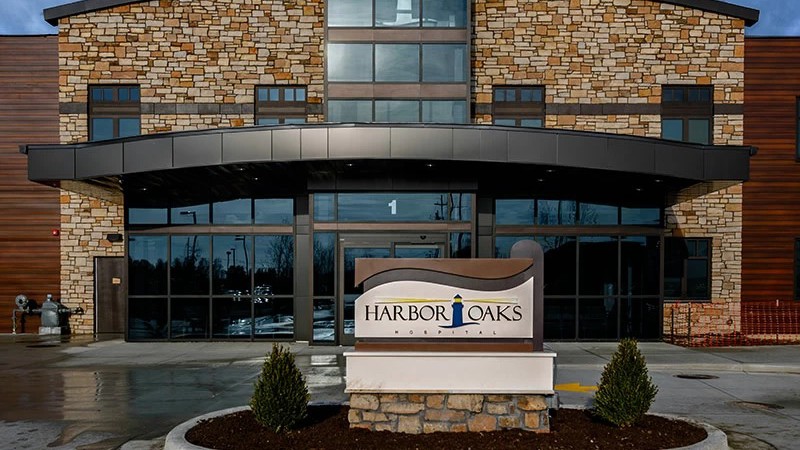
Harbor Oaks Hospital
New Baltimore, MI
48047

Accredited drug rehab centers available across Farmington Hills.
Sliding-scale payments, financial aid, low-cost programs, and local nonprofits.
Medicare, Medicaid, TRICARE, plus local private health insurance coverage.


 Filter
| Name | Address | Description | Treatment | Insurance | Thumbnail |
|---|---|---|---|---|---|
New Oakland Family Centers | 32961 Middlebelt Rd | New Oakland Family Centers is a behavioral health and addiction treatment center in Farmington Hills, Michigan. I'm impressed by their continuum of outpatient ... more details › | Treatment Programs Insurance PHP Partial hospitalization programs (PHPs) can act as a bridge between inpatient and outpatient treatment. This type of outpatient drug rehab in Michigan allows you to participate in structured treatment during the day and return home at night. Outpatient Outpatient rehab in Michigan is tailored to each person’s recovery journey. This treatment usually involves several hours of therapy sessions each week, along with attendance at support group meetings. However, the timeline varies from a few weeks, to months, to years, based on your needs. Dual Diagnosis A dual diagnosis treatment center in Michigan allows you to get treatment for substance abuse and mental health disorders at the same time. This is critical, because untreated mental health disorders often lead to relapse and poor recovery outcomes. +1 | Treatment Programs Insurance Medicaid You may be eligible for Medicaid, which can help with the cost of alcohol and drug rehab in Michigan. Covering all levels of care, Medical Assistance can make detox, inpatient and outpatient rehab, and other forms of addiction affordable. Medicare You may be eligible for Michigan Medicare, which could cover the cost of alcohol and drug rehab in Michigan. The amount of coverage will depend on many things, including whether you are seeking inpatient or outpatient treatment for substance abuse. Financial Aid If you're a Michigan resident in need of financial assistance with rehab, Financial Aid may be an option. This can help you access all levels of care, including detox, inpatient rehab, and more. Types of financial assistance options include grants, scholarships, non-profit programs, personal funding, and health insurance programs to help you manage the expense of substance abuse treatment. Tricare Administered by the Department of Defense, TRICARE offers comprehensive military health insurance plans for active and retired military members and their families. Similar to PPO programs offered by private insurance companies, TRICARE covers multiple levels of care for addiction treatment, including detox, inpatient rehab, and outpatient services. Private If you have private insurance, you may be able to use your coverage to help cover the cost of alcohol and drug rehab in Michigan. Your rehab insurance policy may cover a poirtion of treatment or it may cover 100% of your treatment costs..Check with your insurer for more information. Payment In Michigan, you have the option to pay for your drug or alcohol addiction treatment through self-pay options, also known as private pay. This allows you to manage the cost of your recovery journey. All levels of care, including detox, inpatient rehab, and more, are available to you through this option without limitations of insurers or state-run programs. +4 | |
The Doorway To Recovery – Main Office | 33634 Eight Mile W | The Doorway To Recovery is a faith based sober living and recovery program in Farmington Hills, Michigan. They offer transitional housing and support services for ... more details › | Treatment Programs Insurance Detox When you enter drug rehab in Michigan, you’ll start with detox. This process includes round-the-clock supervision and medical care, to slowly and safely remove toxins from your system. It may include the use of medications to ease withdrawal. Inpatient Inpatient drug rehab in Michigan offers multiple forms of evidence-based treatments and complementary therapies you must particiapte in while living at the facility. Some inpatient rehabs offer nutritional counseling, recreational therapy opportunities, and meditation classes. Outpatient Outpatient rehab in Michigan is tailored to each person’s recovery journey. This treatment usually involves several hours of therapy sessions each week, along with attendance at support group meetings. However, the timeline varies from a few weeks, to months, to years, based on your needs. +1 | Treatment Programs Insurance Private If you have private insurance, you may be able to use your coverage to help cover the cost of alcohol and drug rehab in Michigan. Your rehab insurance policy may cover a poirtion of treatment or it may cover 100% of your treatment costs..Check with your insurer for more information. Payment In Michigan, you have the option to pay for your drug or alcohol addiction treatment through self-pay options, also known as private pay. This allows you to manage the cost of your recovery journey. All levels of care, including detox, inpatient rehab, and more, are available to you through this option without limitations of insurers or state-run programs. | |
Addiction Medicine Consultants – Closed | 24300 Orchard Lake Road | Addiction Medicine Consultants specializes in a discreet approach to treatment, providing care to adults ages 18 and over. Their services are specifically tailored for ... more details › | Treatment Programs Insurance Detox When you enter drug rehab in Michigan, you’ll start with detox. This process includes round-the-clock supervision and medical care, to slowly and safely remove toxins from your system. It may include the use of medications to ease withdrawal. Outpatient Outpatient rehab in Michigan is tailored to each person’s recovery journey. This treatment usually involves several hours of therapy sessions each week, along with attendance at support group meetings. However, the timeline varies from a few weeks, to months, to years, based on your needs. | Treatment Programs Insurance Payment In Michigan, you have the option to pay for your drug or alcohol addiction treatment through self-pay options, also known as private pay. This allows you to manage the cost of your recovery journey. All levels of care, including detox, inpatient rehab, and more, are available to you through this option without limitations of insurers or state-run programs. | |
Beaumont Hospital, Farmington Hills | 28050 Grand River Avenue Farmington Hills MI, 48336 | Beaumont Hospital offers hospital-based behavioral health and substance use treatment for adults in Farmington Hills. The facility provides a focus on dual-diagnosis ... more details › | Treatment Programs Insurance Inpatient Inpatient drug rehab in Michigan offers multiple forms of evidence-based treatments and complementary therapies you must particiapte in while living at the facility. Some inpatient rehabs offer nutritional counseling, recreational therapy opportunities, and meditation classes. Outpatient Outpatient rehab in Michigan is tailored to each person’s recovery journey. This treatment usually involves several hours of therapy sessions each week, along with attendance at support group meetings. However, the timeline varies from a few weeks, to months, to years, based on your needs. Dual Diagnosis A dual diagnosis treatment center in Michigan allows you to get treatment for substance abuse and mental health disorders at the same time. This is critical, because untreated mental health disorders often lead to relapse and poor recovery outcomes. +1 | Treatment Programs Insurance Medicaid You may be eligible for Medicaid, which can help with the cost of alcohol and drug rehab in Michigan. Covering all levels of care, Medical Assistance can make detox, inpatient and outpatient rehab, and other forms of addiction affordable. Medicare You may be eligible for Michigan Medicare, which could cover the cost of alcohol and drug rehab in Michigan. The amount of coverage will depend on many things, including whether you are seeking inpatient or outpatient treatment for substance abuse. Financial Aid If you're a Michigan resident in need of financial assistance with rehab, Financial Aid may be an option. This can help you access all levels of care, including detox, inpatient rehab, and more. Types of financial assistance options include grants, scholarships, non-profit programs, personal funding, and health insurance programs to help you manage the expense of substance abuse treatment. Payment In Michigan, you have the option to pay for your drug or alcohol addiction treatment through self-pay options, also known as private pay. This allows you to manage the cost of your recovery journey. All levels of care, including detox, inpatient rehab, and more, are available to you through this option without limitations of insurers or state-run programs. +2 | |
New Oakland Family Centers | 32961 Middlebelt Rd | New Oakland Family Centers is a behavioral health and addiction treatment center in Farmington Hills, Michigan. I'm impressed by their continuum of outpatient ... more details › | Treatment Programs Insurance PHP Partial hospitalization programs (PHPs) can act as a bridge between inpatient and outpatient treatment. This type of outpatient drug rehab in Michigan allows you to participate in structured treatment during the day and return home at night. Outpatient Outpatient rehab in Michigan is tailored to each person’s recovery journey. This treatment usually involves several hours of therapy sessions each week, along with attendance at support group meetings. However, the timeline varies from a few weeks, to months, to years, based on your needs. Dual Diagnosis A dual diagnosis treatment center in Michigan allows you to get treatment for substance abuse and mental health disorders at the same time. This is critical, because untreated mental health disorders often lead to relapse and poor recovery outcomes. +1 | Treatment Programs Insurance Medicaid You may be eligible for Medicaid, which can help with the cost of alcohol and drug rehab in Michigan. Covering all levels of care, Medical Assistance can make detox, inpatient and outpatient rehab, and other forms of addiction affordable. Medicare You may be eligible for Michigan Medicare, which could cover the cost of alcohol and drug rehab in Michigan. The amount of coverage will depend on many things, including whether you are seeking inpatient or outpatient treatment for substance abuse. Financial Aid If you're a Michigan resident in need of financial assistance with rehab, Financial Aid may be an option. This can help you access all levels of care, including detox, inpatient rehab, and more. Types of financial assistance options include grants, scholarships, non-profit programs, personal funding, and health insurance programs to help you manage the expense of substance abuse treatment. Tricare Administered by the Department of Defense, TRICARE offers comprehensive military health insurance plans for active and retired military members and their families. Similar to PPO programs offered by private insurance companies, TRICARE covers multiple levels of care for addiction treatment, including detox, inpatient rehab, and outpatient services. Private If you have private insurance, you may be able to use your coverage to help cover the cost of alcohol and drug rehab in Michigan. Your rehab insurance policy may cover a poirtion of treatment or it may cover 100% of your treatment costs..Check with your insurer for more information. Payment In Michigan, you have the option to pay for your drug or alcohol addiction treatment through self-pay options, also known as private pay. This allows you to manage the cost of your recovery journey. All levels of care, including detox, inpatient rehab, and more, are available to you through this option without limitations of insurers or state-run programs. +4 | |
The Doorway To Recovery – Main Office | 33634 Eight Mile W | The Doorway To Recovery is a faith based sober living and recovery program in Farmington Hills, Michigan. They offer transitional housing and support services for ... more details › | Treatment Programs Insurance Detox When you enter drug rehab in Michigan, you’ll start with detox. This process includes round-the-clock supervision and medical care, to slowly and safely remove toxins from your system. It may include the use of medications to ease withdrawal. Inpatient Inpatient drug rehab in Michigan offers multiple forms of evidence-based treatments and complementary therapies you must particiapte in while living at the facility. Some inpatient rehabs offer nutritional counseling, recreational therapy opportunities, and meditation classes. Outpatient Outpatient rehab in Michigan is tailored to each person’s recovery journey. This treatment usually involves several hours of therapy sessions each week, along with attendance at support group meetings. However, the timeline varies from a few weeks, to months, to years, based on your needs. +1 | Treatment Programs Insurance Private If you have private insurance, you may be able to use your coverage to help cover the cost of alcohol and drug rehab in Michigan. Your rehab insurance policy may cover a poirtion of treatment or it may cover 100% of your treatment costs..Check with your insurer for more information. Payment In Michigan, you have the option to pay for your drug or alcohol addiction treatment through self-pay options, also known as private pay. This allows you to manage the cost of your recovery journey. All levels of care, including detox, inpatient rehab, and more, are available to you through this option without limitations of insurers or state-run programs. | |
The Doorway to Recovery | 19308 Farmington Rd | The Doorway to Recovery is an addiction treatment provider in Livonia, Michigan. I'm impressed by their multiple levels of care, including detox and MAT, ... more details › | Treatment Programs Insurance Detox When you enter drug rehab in Michigan, you’ll start with detox. This process includes round-the-clock supervision and medical care, to slowly and safely remove toxins from your system. It may include the use of medications to ease withdrawal. Inpatient Inpatient drug rehab in Michigan offers multiple forms of evidence-based treatments and complementary therapies you must particiapte in while living at the facility. Some inpatient rehabs offer nutritional counseling, recreational therapy opportunities, and meditation classes. Outpatient Outpatient rehab in Michigan is tailored to each person’s recovery journey. This treatment usually involves several hours of therapy sessions each week, along with attendance at support group meetings. However, the timeline varies from a few weeks, to months, to years, based on your needs. +1 | Treatment Programs Insurance Private If you have private insurance, you may be able to use your coverage to help cover the cost of alcohol and drug rehab in Michigan. Your rehab insurance policy may cover a poirtion of treatment or it may cover 100% of your treatment costs..Check with your insurer for more information. Payment In Michigan, you have the option to pay for your drug or alcohol addiction treatment through self-pay options, also known as private pay. This allows you to manage the cost of your recovery journey. All levels of care, including detox, inpatient rehab, and more, are available to you through this option without limitations of insurers or state-run programs. | |
Therapeutics LLC | 1010 E West Maple Rd | Therapeutics LLC is an outpatient substance use treatment provider in Walled Lake, Michigan specializing in opioid addiction treatment for adults and young adults. ... more details › | Treatment Programs Insurance Detox When you enter drug rehab in Michigan, you’ll start with detox. This process includes round-the-clock supervision and medical care, to slowly and safely remove toxins from your system. It may include the use of medications to ease withdrawal. Inpatient Inpatient drug rehab in Michigan offers multiple forms of evidence-based treatments and complementary therapies you must particiapte in while living at the facility. Some inpatient rehabs offer nutritional counseling, recreational therapy opportunities, and meditation classes. Outpatient Outpatient rehab in Michigan is tailored to each person’s recovery journey. This treatment usually involves several hours of therapy sessions each week, along with attendance at support group meetings. However, the timeline varies from a few weeks, to months, to years, based on your needs. Intervention Intervention services in Michigan are often key to starting the recovery process. Intervention specialists provide support to encourage your loved one to get the help they need, provide access to educational and comjunity resources, and offer assistance with developing intervention and treatment plans. +2 | Treatment Programs Insurance Medicaid You may be eligible for Medicaid, which can help with the cost of alcohol and drug rehab in Michigan. Covering all levels of care, Medical Assistance can make detox, inpatient and outpatient rehab, and other forms of addiction affordable. Medicare You may be eligible for Michigan Medicare, which could cover the cost of alcohol and drug rehab in Michigan. The amount of coverage will depend on many things, including whether you are seeking inpatient or outpatient treatment for substance abuse. Private If you have private insurance, you may be able to use your coverage to help cover the cost of alcohol and drug rehab in Michigan. Your rehab insurance policy may cover a poirtion of treatment or it may cover 100% of your treatment costs..Check with your insurer for more information. Payment In Michigan, you have the option to pay for your drug or alcohol addiction treatment through self-pay options, also known as private pay. This allows you to manage the cost of your recovery journey. All levels of care, including detox, inpatient rehab, and more, are available to you through this option without limitations of insurers or state-run programs. +2 | |
Trinity Health Livonia Hospital | 36475 Five Mile Road | Trinity Health Livonia Hospital is a 304-bed community facility in Livonia, Michigan offering addiction recovery and behavioral health services for adults age 18 and ... more details › | Treatment Programs Insurance Inpatient Inpatient drug rehab in Michigan offers multiple forms of evidence-based treatments and complementary therapies you must particiapte in while living at the facility. Some inpatient rehabs offer nutritional counseling, recreational therapy opportunities, and meditation classes. Outpatient Outpatient rehab in Michigan is tailored to each person’s recovery journey. This treatment usually involves several hours of therapy sessions each week, along with attendance at support group meetings. However, the timeline varies from a few weeks, to months, to years, based on your needs. Dual Diagnosis A dual diagnosis treatment center in Michigan allows you to get treatment for substance abuse and mental health disorders at the same time. This is critical, because untreated mental health disorders often lead to relapse and poor recovery outcomes. +1 | Treatment Programs Insurance Medicaid You may be eligible for Medicaid, which can help with the cost of alcohol and drug rehab in Michigan. Covering all levels of care, Medical Assistance can make detox, inpatient and outpatient rehab, and other forms of addiction affordable. Medicare You may be eligible for Michigan Medicare, which could cover the cost of alcohol and drug rehab in Michigan. The amount of coverage will depend on many things, including whether you are seeking inpatient or outpatient treatment for substance abuse. Financial Aid If you're a Michigan resident in need of financial assistance with rehab, Financial Aid may be an option. This can help you access all levels of care, including detox, inpatient rehab, and more. Types of financial assistance options include grants, scholarships, non-profit programs, personal funding, and health insurance programs to help you manage the expense of substance abuse treatment. Tricare Administered by the Department of Defense, TRICARE offers comprehensive military health insurance plans for active and retired military members and their families. Similar to PPO programs offered by private insurance companies, TRICARE covers multiple levels of care for addiction treatment, including detox, inpatient rehab, and outpatient services. Private If you have private insurance, you may be able to use your coverage to help cover the cost of alcohol and drug rehab in Michigan. Your rehab insurance policy may cover a poirtion of treatment or it may cover 100% of your treatment costs..Check with your insurer for more information. Payment In Michigan, you have the option to pay for your drug or alcohol addiction treatment through self-pay options, also known as private pay. This allows you to manage the cost of your recovery journey. All levels of care, including detox, inpatient rehab, and more, are available to you through this option without limitations of insurers or state-run programs. +4 | |
Community Outreach for Psychiatric Emergencies | 33505 Schoolcraft Rd | Community Outreach for Psychiatric Emergencies (COPE) is a Hegira Health program in Livonia providing crisis-focused behavioral health services across Wayne ... more details › | Treatment Programs Insurance Outpatient Outpatient rehab in Michigan is tailored to each person’s recovery journey. This treatment usually involves several hours of therapy sessions each week, along with attendance at support group meetings. However, the timeline varies from a few weeks, to months, to years, based on your needs. Dual Diagnosis A dual diagnosis treatment center in Michigan allows you to get treatment for substance abuse and mental health disorders at the same time. This is critical, because untreated mental health disorders often lead to relapse and poor recovery outcomes. | Treatment Programs Insurance Medicaid You may be eligible for Medicaid, which can help with the cost of alcohol and drug rehab in Michigan. Covering all levels of care, Medical Assistance can make detox, inpatient and outpatient rehab, and other forms of addiction affordable. Medicare You may be eligible for Michigan Medicare, which could cover the cost of alcohol and drug rehab in Michigan. The amount of coverage will depend on many things, including whether you are seeking inpatient or outpatient treatment for substance abuse. Financial Aid If you're a Michigan resident in need of financial assistance with rehab, Financial Aid may be an option. This can help you access all levels of care, including detox, inpatient rehab, and more. Types of financial assistance options include grants, scholarships, non-profit programs, personal funding, and health insurance programs to help you manage the expense of substance abuse treatment. Private If you have private insurance, you may be able to use your coverage to help cover the cost of alcohol and drug rehab in Michigan. Your rehab insurance policy may cover a poirtion of treatment or it may cover 100% of your treatment costs..Check with your insurer for more information. Payment In Michigan, you have the option to pay for your drug or alcohol addiction treatment through self-pay options, also known as private pay. This allows you to manage the cost of your recovery journey. All levels of care, including detox, inpatient rehab, and more, are available to you through this option without limitations of insurers or state-run programs. +3 | |
Life Challenge of Southeastern Michigan | 17667 Pierson Street | Located in Detroit, Michigan, Life Challenge of Southeastern Michigan is a faith-based drug and alcohol addiction treatment center for adults. The center offers a ... more details › | Treatment Programs Insurance Detox When you enter drug rehab in Michigan, you’ll start with detox. This process includes round-the-clock supervision and medical care, to slowly and safely remove toxins from your system. It may include the use of medications to ease withdrawal. Inpatient Inpatient drug rehab in Michigan offers multiple forms of evidence-based treatments and complementary therapies you must particiapte in while living at the facility. Some inpatient rehabs offer nutritional counseling, recreational therapy opportunities, and meditation classes. Outpatient Outpatient rehab in Michigan is tailored to each person’s recovery journey. This treatment usually involves several hours of therapy sessions each week, along with attendance at support group meetings. However, the timeline varies from a few weeks, to months, to years, based on your needs. Aftercare Aftercare rehab in Michigan helps you overcome hurdles after completing an addiction treatment program. You can receive assistance with finding a job, navigating legal issues, getting education, or plugging into a support group. These aftercare services unlock resources to help you continue to live a sober life. Sober Living Acting as a bridge between rehab and the rest of your life, sober living in Michigan can be very beneficial. This drug-free residential setting provides structure and teaches responsibility. You’ll receive peer support and strengthen skills you learned in rehab. Once you feel ready to live on your own, you can transition from sober living to independent housing. Intervention Intervention services in Michigan are often key to starting the recovery process. Intervention specialists provide support to encourage your loved one to get the help they need, provide access to educational and comjunity resources, and offer assistance with developing intervention and treatment plans. +4 | Treatment Programs Insurance Private If you have private insurance, you may be able to use your coverage to help cover the cost of alcohol and drug rehab in Michigan. Your rehab insurance policy may cover a poirtion of treatment or it may cover 100% of your treatment costs..Check with your insurer for more information. Payment In Michigan, you have the option to pay for your drug or alcohol addiction treatment through self-pay options, also known as private pay. This allows you to manage the cost of your recovery journey. All levels of care, including detox, inpatient rehab, and more, are available to you through this option without limitations of insurers or state-run programs. | |
Ascension Eastwood Recovery Center | 29451 Greenfield Rd | Ascension Eastwood Recovery Center is a residential addiction treatment facility located on Greenfield Road in Southfield, Michigan. The center offers medically ... more details › | Treatment Programs Insurance Detox When you enter drug rehab in Michigan, you’ll start with detox. This process includes round-the-clock supervision and medical care, to slowly and safely remove toxins from your system. It may include the use of medications to ease withdrawal. Inpatient Inpatient drug rehab in Michigan offers multiple forms of evidence-based treatments and complementary therapies you must particiapte in while living at the facility. Some inpatient rehabs offer nutritional counseling, recreational therapy opportunities, and meditation classes. Outpatient Outpatient rehab in Michigan is tailored to each person’s recovery journey. This treatment usually involves several hours of therapy sessions each week, along with attendance at support group meetings. However, the timeline varies from a few weeks, to months, to years, based on your needs. Dual Diagnosis A dual diagnosis treatment center in Michigan allows you to get treatment for substance abuse and mental health disorders at the same time. This is critical, because untreated mental health disorders often lead to relapse and poor recovery outcomes. Aftercare Aftercare rehab in Michigan helps you overcome hurdles after completing an addiction treatment program. You can receive assistance with finding a job, navigating legal issues, getting education, or plugging into a support group. These aftercare services unlock resources to help you continue to live a sober life. Intervention Intervention services in Michigan are often key to starting the recovery process. Intervention specialists provide support to encourage your loved one to get the help they need, provide access to educational and comjunity resources, and offer assistance with developing intervention and treatment plans. +4 | Treatment Programs Insurance Medicaid You may be eligible for Medicaid, which can help with the cost of alcohol and drug rehab in Michigan. Covering all levels of care, Medical Assistance can make detox, inpatient and outpatient rehab, and other forms of addiction affordable. Financial Aid If you're a Michigan resident in need of financial assistance with rehab, Financial Aid may be an option. This can help you access all levels of care, including detox, inpatient rehab, and more. Types of financial assistance options include grants, scholarships, non-profit programs, personal funding, and health insurance programs to help you manage the expense of substance abuse treatment. Private If you have private insurance, you may be able to use your coverage to help cover the cost of alcohol and drug rehab in Michigan. Your rehab insurance policy may cover a poirtion of treatment or it may cover 100% of your treatment costs..Check with your insurer for more information. Payment In Michigan, you have the option to pay for your drug or alcohol addiction treatment through self-pay options, also known as private pay. This allows you to manage the cost of your recovery journey. All levels of care, including detox, inpatient rehab, and more, are available to you through this option without limitations of insurers or state-run programs. +2 | |
Pontiac VA Clinic | 44200 Woodward Ave | Pontiac VA Clinic is a Veterans Affairs outpatient clinic serving Veterans in Pontiac, Michigan. The clinic coordinates mental health care, social services, ... more details › | Treatment Programs Insurance Detox When you enter drug rehab in Michigan, you’ll start with detox. This process includes round-the-clock supervision and medical care, to slowly and safely remove toxins from your system. It may include the use of medications to ease withdrawal. Inpatient Inpatient drug rehab in Michigan offers multiple forms of evidence-based treatments and complementary therapies you must particiapte in while living at the facility. Some inpatient rehabs offer nutritional counseling, recreational therapy opportunities, and meditation classes. Outpatient Outpatient rehab in Michigan is tailored to each person’s recovery journey. This treatment usually involves several hours of therapy sessions each week, along with attendance at support group meetings. However, the timeline varies from a few weeks, to months, to years, based on your needs. Dual Diagnosis A dual diagnosis treatment center in Michigan allows you to get treatment for substance abuse and mental health disorders at the same time. This is critical, because untreated mental health disorders often lead to relapse and poor recovery outcomes. Aftercare Aftercare rehab in Michigan helps you overcome hurdles after completing an addiction treatment program. You can receive assistance with finding a job, navigating legal issues, getting education, or plugging into a support group. These aftercare services unlock resources to help you continue to live a sober life. Intervention Intervention services in Michigan are often key to starting the recovery process. Intervention specialists provide support to encourage your loved one to get the help they need, provide access to educational and comjunity resources, and offer assistance with developing intervention and treatment plans. +4 | Treatment Programs Insurance Medicaid You may be eligible for Medicaid, which can help with the cost of alcohol and drug rehab in Michigan. Covering all levels of care, Medical Assistance can make detox, inpatient and outpatient rehab, and other forms of addiction affordable. Medicare You may be eligible for Michigan Medicare, which could cover the cost of alcohol and drug rehab in Michigan. The amount of coverage will depend on many things, including whether you are seeking inpatient or outpatient treatment for substance abuse. Financial Aid If you're a Michigan resident in need of financial assistance with rehab, Financial Aid may be an option. This can help you access all levels of care, including detox, inpatient rehab, and more. Types of financial assistance options include grants, scholarships, non-profit programs, personal funding, and health insurance programs to help you manage the expense of substance abuse treatment. Tricare Administered by the Department of Defense, TRICARE offers comprehensive military health insurance plans for active and retired military members and their families. Similar to PPO programs offered by private insurance companies, TRICARE covers multiple levels of care for addiction treatment, including detox, inpatient rehab, and outpatient services. Private If you have private insurance, you may be able to use your coverage to help cover the cost of alcohol and drug rehab in Michigan. Your rehab insurance policy may cover a poirtion of treatment or it may cover 100% of your treatment costs..Check with your insurer for more information. Payment In Michigan, you have the option to pay for your drug or alcohol addiction treatment through self-pay options, also known as private pay. This allows you to manage the cost of your recovery journey. All levels of care, including detox, inpatient rehab, and more, are available to you through this option without limitations of insurers or state-run programs. +4 | |
Life Science RDD Rapid Drug Detox | 5130 Coolidge Highway, Suite 210, Royal Oak, MI 48073 | Life Science RDD Services LLC, also known as Rapid Drug Detox, is a specialized opioid detox center in Royal Oak, Michigan focused on helping clients safely withdraw ... more details › | Treatment Programs Insurance Detox When you enter drug rehab in Michigan, you’ll start with detox. This process includes round-the-clock supervision and medical care, to slowly and safely remove toxins from your system. It may include the use of medications to ease withdrawal. Inpatient Inpatient drug rehab in Michigan offers multiple forms of evidence-based treatments and complementary therapies you must particiapte in while living at the facility. Some inpatient rehabs offer nutritional counseling, recreational therapy opportunities, and meditation classes. Outpatient Outpatient rehab in Michigan is tailored to each person’s recovery journey. This treatment usually involves several hours of therapy sessions each week, along with attendance at support group meetings. However, the timeline varies from a few weeks, to months, to years, based on your needs. +1 | Treatment Programs Insurance Private If you have private insurance, you may be able to use your coverage to help cover the cost of alcohol and drug rehab in Michigan. Your rehab insurance policy may cover a poirtion of treatment or it may cover 100% of your treatment costs..Check with your insurer for more information. Payment In Michigan, you have the option to pay for your drug or alcohol addiction treatment through self-pay options, also known as private pay. This allows you to manage the cost of your recovery journey. All levels of care, including detox, inpatient rehab, and more, are available to you through this option without limitations of insurers or state-run programs. | |
Life Science RDD Services LLC, Rapid Drug Detox | 5130 Coolidge Hwy | Life Science RDD Services operates as Rapid Drug Detox an addiction treatment provider in Royal Oak, Michigan offering care for alcohol and drug use concerns. ... more details › | Treatment Programs Insurance Detox When you enter drug rehab in Michigan, you’ll start with detox. This process includes round-the-clock supervision and medical care, to slowly and safely remove toxins from your system. It may include the use of medications to ease withdrawal. Inpatient Inpatient drug rehab in Michigan offers multiple forms of evidence-based treatments and complementary therapies you must particiapte in while living at the facility. Some inpatient rehabs offer nutritional counseling, recreational therapy opportunities, and meditation classes. Outpatient Outpatient rehab in Michigan is tailored to each person’s recovery journey. This treatment usually involves several hours of therapy sessions each week, along with attendance at support group meetings. However, the timeline varies from a few weeks, to months, to years, based on your needs. +1 | Treatment Programs Insurance Private If you have private insurance, you may be able to use your coverage to help cover the cost of alcohol and drug rehab in Michigan. Your rehab insurance policy may cover a poirtion of treatment or it may cover 100% of your treatment costs..Check with your insurer for more information. Payment In Michigan, you have the option to pay for your drug or alcohol addiction treatment through self-pay options, also known as private pay. This allows you to manage the cost of your recovery journey. All levels of care, including detox, inpatient rehab, and more, are available to you through this option without limitations of insurers or state-run programs. |
If you’re looking for free or low-cost addiction treatment in Farmington Hills, Michigan, the good news is that affordability does not depend on paying out of pocket. Between Medicaid, Healthy Michigan, and a network of nonprofit and county-funded providers, detox, outpatient care, and medication for opioid use disorder (MOUD) are all reachable options for residents who are uninsured, underinsured, or simply priced out of private-pay rehab.
Michigan is a Medicaid expansion state, which is meaningful. It means more working-age adults in Farmington Hills qualify for covered substance use disorder (SUD) treatment than they would in a state that never expanded the program. Medicaid coverage runs through Oakland Community Health Network’s regional plan, and providers across the county.
This includes Federally Qualified Health Centers like Honor Community Health that accept Medicaid alongside a sliding-scale option for anyone without insurance. Farmington Hills is one of the more affluent communities in Oakland County, and it does not have its own standalone public treatment clinic the way Pontiac does.
That is not a gap so much as a design choice. The county centralizes its crisis and access services in Pontiac and its harm reduction clinic there too, while spreading free naloxone access through Save A Life stations across every community, Farmington Hills included.
Below is the full list of free and low-cost resources available to Farmington Hills residents, organized by government programs, harm reduction, nonprofits, and support groups. If a program’s hours or location in Pontiac don’t work for you, Southfield, about seven miles away, has its own county-funded office with several of the same providers.
Free Treatment Score: 6.2/10. Farmington Hills sits in a county with an above-average safety net, even though this affluent suburb has fewer standalone programs of its own.
Farmington Hills carries a Free Treatment Score of 6.2, and that number describes a county-wide safety net more than a hyper-local one. This is an affluent suburb without a public clinic of its own, so residents typically start with a phone call rather than a walk-in visit.
Oakland Community Health Network, the county’s public mental health authority, will screen anyone with Medicaid, Healthy Michigan, or no insurance and route them toward free or sliding-scale care, and Michigan’s Medicaid expansion means more working adults qualify than in states that never expanded coverage. Explore Medicaid rehab options in Michigan to see what else is available statewide.
Most of the county’s dedicated crisis and harm-reduction sites sit in Pontiac, a short drive from Farmington Hills, but naloxone and syringe access do not require a trip there: Oakland County runs more than 100 free naloxone stations spread across the county, and mail-order naloxone reaches any address in Michigan.
A good first step is calling OCHN’s access line or the state’s crisis line, so a wait or a mismatch at one door does not become a dead end. Learn more about our Free Treatment Score methodology.

 800-783-0593
 Sponsored
