
Four Winds Saratoga
30 Crescent Avenue
Saratoga Springs, NY 12866
 Sponsored
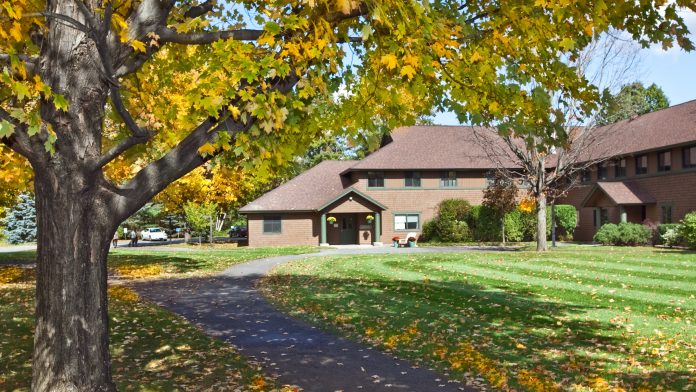
About Four Winds Saratoga
Both Medicare and Medicaid are accepted at Four Winds Saratoga, an 88-bed private psychiatric hospital and treatment program in Saratoga Springs, New York. They treat mental health conditions together with co-occurring substance use in children 5 and older, adolescents and adults.
Insurance, Medicaid and Medicare
They also take third-party insurance. New York State Medicaid is accepted for people under 22 and people over 65, while Managed Medicaid plans count at any age.
If you’re counting on Medicaid, those age rules decide whether the plan you already have is accepted at Four Winds.
Intensive Outpatient in Saratoga Springs
Adults 18 and older in the Adult Intensive Outpatient Program meet for group programming three times a week, online. A schedule like that leaves the workweek open, so it’s possible to keep a job while in treatment. The program also includes psychiatric assessment and medication management.
The skill-building groups use a model built on dialectical behavior therapy, a structured way to learn to handle strong emotions and get through hard moments. For adolescents and adults, the Partial Hospitalization Program at Four Winds Saratoga meets full days, Monday through Friday.
Family members take part in treatment and in discharge planning in every program they run. The hospital is licensed by the NYS OMH (the state’s mental health office) and accredited by The Joint Commission.
Amenities
Private drug rehab provides a comfortable, secure environment that allows you to focus on doing the work to get your life back on track. Benefits include a higher staff-to-client ratio, increased one-on-one time with therapists and healthcare providers, private rooms for clients, and customized forms of therapy.
Residential drug rehab provides the comforts of home with the therapeutic support needed to successfully recover. Benefits of an inpatient program include increased safety, a higher success rate, and the time and distance given to focus on recovery. Residential drug rehabs are often the preferred method of treatment, as they can be tailored to meet specific needs, offer focused therapeutic care, and provide the necessary tools to sustain recovery.
In order to maintain a sense of autonomy, many private rehab facilities offer clients the ability to choose their own private rooms. The privacy and personal space ensure that the recovery process is as comfortable as possible.
Addiction Treatment Programs
The Adolescent Treatment program runs two units, split between younger teens and older teens, staffed by psychiatry, nursing, social work and mental health counselors.
Adults are treated in the inpatient mental health service, alongside children and adolescents in the same service.
To address the full range of issues involved in alcohol use disorder, an alcohol rehab in New York often incorporates a variety of treatment methods. Physical activity, nutrition, psychotherapy, and support groups are common aspects of treatment.
Some men benefit most from men’s rehab in New York. These programs understand the unique challenges that men face when struggling with addiction, and they offer personalized treatment to address these challenges.
Men and women face different issues when it comes to addiction and recovery. Women’s rehab in New York offers treatment approaches that address life issues that are specific to women.
Cognitive behavioral therapy in New York emphasizes how thoughts affect mood. It is a goal-oriented method that teaches participants how to address dysfunctional thoughts and underlying beliefs that can lead to substance abuse and addiction.
When you choose drug rehab in New York, you’ll participate in a variety of treatments that are designed to help you live a drug-free lifestyle. Common methods of treatment include group, individual, and family counseling, medication management, nutrition, exercise, and management of co-occurring mental health disorders.
During elderly rehab in New York, you’ll participate in a variety of therapies, including individual, group, and family. Common methods include cognitive behavioral therapy, 12-step methods, and case management, all with a focus on age-specific needs.
Rational emotive behavioral therapy in New York is often used to treat substance use disorders as well as a variety of other mental health and behavioral disorders. It focuses on the present, achieving goals, and overcoming hardship.
Assertive Community Treatment (ACT) is an integrative, community-based care strategy designed to address the needs of persons with severe and/or complex mental illness or behavioral disorders. ACT is typically provided by a multidisciplinary team of medical and mental health care providers, social workers, therapists, and other specialists, including addiction recovery professionals. These services are frequently provided in the home and community to clients in crisis, those who are clinically unstable, and those who are unable or unwilling to travel to a hospital or clinic for in-person treatment.
Levels of Care
Outpatient behavioral health treatment is offered alongside the inpatient service, and children, adolescents and adults are treated at both levels.
Mental health disorders that co-occur with substance abuse disorders often cause relapse. For successful recovery, both disorders must be treated, with dual diagnosis treatment in New York. Common methods include cognitive-behavioral therapy, medication management, and counseling.
Inpatient drug rehab in New York can last 28 to 90 days, depending on the program. During that time, you’ll live at the rehab facility and receive various treatment methods including individual and group therapy.
A New York sober living program is appropriate for those who want to stop using drugs or alcohol but don’t feel ready to do so on their own. This communal environment allows you to live with others who are in recovery, for mutual support and accountability. A structured schedule and strict house policies help you strengthen your recovery skills, until you are strong enough to live independently.
Intervention services are a valuable addiction treatment tool for those seeking to get a loved one started on a recovery journey. Professional intervention staff can help plan and facilitate interventions, provide access to key resources, and assist in developing a personalized treatment plan for drug rehab in New York.
The partial hospitalization program at Saratoga is short term and structured, with group based therapy Monday through Friday, full days, for adolescents and adults.
The adult intensive outpatient program is short term and group based, for people 18 and older who are working on mental health.
Accreditations
Contact Information


 Sponsored
Peter W.Y. Lee is a historian specializing in American Cold War history. He has published widely on youth culture and the social impact of popular culture throughout the twentieth century and how the public has approached culture as a means of coping with the challenges that accompany changing times.
Rehabs.org regularly reviews this listing for accuracy but changes may occur between updates. For the most up-to-date information, please contact Four Winds Saratoga.
Nearby Treatment Centers
2452 US-9
#302
Saratoga County, NY 12019

211 Church Street
Saratoga Springs, NY 12866
79 Glenridge Road
Glenville, NY 12302
125 High Rock Avenue
Saratoga Springs, NY 12866
Popular New York Cities
More Cities View Other New York CitiesFAQs
Is Four Winds Saratoga an inpatient or outpatient program?
Both. Treatment runs inpatient and outpatient, with outpatient rehab and an adult intensive outpatient program. The partial program is full day group therapy Monday through Friday, and the IOP is short term group therapy for adults 18 and older.
Does Four Winds treat teenagers as well as adults?
Yes. The Adolescent Treatment program runs two unique units, split between younger teens and older teens, with psychiatry, nursing, social work and mental health counselors on the team. Children and adults are treated as well, so the age range runs from childhood through adulthood.
What does a week look like in the partial program?
A week is Monday through Friday, full days, with group based therapy and a short term structure. Adolescents and adults both attend, and the program is built around that fixed daytime schedule.
Can adults attend group sessions from home?
Yes. Adults attend group programming virtually. That means the group work happens remotely, and a person can join from home rather than travel for it.
