
CHD Griswold Center
 Sponsored

About CHD Griswold Center
CHD Griswold Center is an addiction treatment center in Palmer, Massachusetts.
Private health insurance and cash payment are taken as well. Care here is outpatient. Buprenorphine and naltrexone are both used in treatment, and therapy is offered by telehealth.
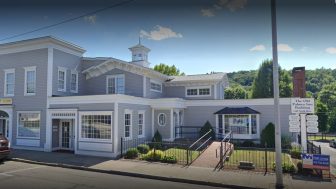
I want to note that the center shares a building with Baystate Wing Hospital.
Do they take Medicare and Medicaid?
They accept Medicaid, Medicare and military insurance such as TRICARE. Medicare and Medicaid each set their own eligibility rules.
The center will continue to take every plan that Baystate Behavioral Health - Palmer accepts.
Who does the center serve?
Patients of all ages can get care at the Palmer site, and I think it's noteworthy that they have more than 24,000 visits a year.
CHD, the nonprofit that runs the center, was founded in 1972 and is the state designated Community Behavioral Health Center for Palmer, Ware, Monson and seven more towns across western Massachusetts.
Amenities
Private drug rehab provides a comfortable, secure environment that allows you to focus on doing the work to get your life back on track. Benefits include a higher staff-to-client ratio, increased one-on-one time with therapists and healthcare providers, private rooms for clients, and customized forms of therapy.
Residential drug rehab provides the comforts of home with the therapeutic support needed to successfully recover. Benefits of an inpatient program include increased safety, a higher success rate, and the time and distance given to focus on recovery. Residential drug rehabs are often the preferred method of treatment, as they can be tailored to meet specific needs, offer focused therapeutic care, and provide the necessary tools to sustain recovery.
Addiction Treatment Programs
Adults are treated here alongside patients of every other age, and the program logs more than 24,000 visits a year.
Most alcohol rehab in Massachusetts consists of individual counseling and group therapy sessions, which address mental and emotional concerns that are contributing to alcohol use. Treatment helps participants make changes to maintain sobriety and prevent relapse.
Cognitive behavioral therapy in Massachusetts is a hands-on method that engages participants in changing their thought and behavior patterns. Rather than a talk-listen approach, individuals are actively involved in working with their therapist to treat their addiction.
For men who want to stop drinking or using drugs, men’s rehab in Massachusetts offers help and hope. These treatment programs, designed specifically for men, help participants recover and rebuild their lives.
When you enter opioid rehab in Massachusetts, you’ll receive treatment in a supportive environment that encourages recovery. After successful withdrawal management, you’ll participate in a variety of evidence-based therapies that prepare you for long-term sobriety.
Elderly rehab in Massachusetts addresses both addiction issues and common challenges faced by older adults. By dealing with grief, loss, social isolation, and financial uncertainty, participants are given tools to overcome addiction later in life.
Women who are seeking treatment for substance use disorders can receive various levels of care at women’s rehab in Massachusetts. Programs include detox, partial hospitalization programs (PHP), intensive outpatient programs (IOP), telehealth programs, sober living, outpatient, and aftercare.
Teen and young adult substance abuse can set individuals on a life-long path of destruction. A young adult program in Massachusetts can intervene in young adults’ lives to set them on a better path during this crucial stage of life.
Levels of Care
The first step to a drug-free future is detox. This involves slowly and safely ridding your body of all addictive substances, under 24/7 supervision. This is typically the initial phase of drug rehab in Massachusetts.
As the most intensive treatment setting, inpatient drug rehab in Massachusetts treatment involves 24/7 supervised care. At this level of care, you typically participate in individual, group, and family therapy sessions, and you may receive medication and additional recreational therapies.
Massachusetts outpatient rehab does not have a defined timeline. The program is tailored to meet your recovery needs, and may last 90 days or a year or more. During this time, you will attend therapy sessions and support group meetings, for ongoing accountability and development of sober-living skills.
Aftercare rehab in Massachusetts gives you continued access to support after rehab. You may need assistance with job coaching, budgeting, education, or accountability as you re-enter your life. Aftercare programs provide these supports, so you can face challenges and maintain a sober lifestyle long-term.
If you meet the diagnostic criteria for two or more conditions, you have a dual diagnosis. Massachusetts dual diagnosis treatment is designed to address both conditions simultaneously, for improved recovery outcomes.
Accreditations
Accepted Insurance

Contact Information


 Sponsored
Natalie is a recent graduate of Purdue University, where she studied psychology and creative writing. Every morning, she’s fueled by a cup of tea and her passion for making sure mental health resources are accessible to everyone. In her spare time, she loves writing poetry by her window, where she can watch the sunrise.
Rehabs.org regularly reviews this listing for accuracy but changes may occur between updates. For the most up-to-date information, please contact CHD Griswold Center.
Nearby Treatment Centers


Popular Massachusetts Cities
More Cities View Other Massachusetts CitiesFAQs
Does CHD Griswold Center take the same insurance as before?
Yes. The CHD Griswold Center accepts all the insurances that were accepted at the Palmer program before the change of operator, so health insurance for rehab carries over with the new operator.
Who does the center see for care?
The center treats people of any age and at any stage of life. It serves families across the Quaboag Hills region, in Hampshire, Hampden and Worcester counties, and receives more than 24,000 visits a year.
Is the program staying at the same location?
It remains in the same place on the Baystate Wing Campus in Palmer, where the program has been housed at the Griswold Center. The address does not change with the new operator.
What is the Center for Human Development and how does it run this site?
The Center for Human Development runs the Palmer site now, and services are planned to continue unchanged under the new name, CHD Griswold Center. CHD is a nonprofit founded in 1972, and it holds the state’s Community Behavioral Health Center designation for Palmer, Ware and Monson.
