
 Sponsored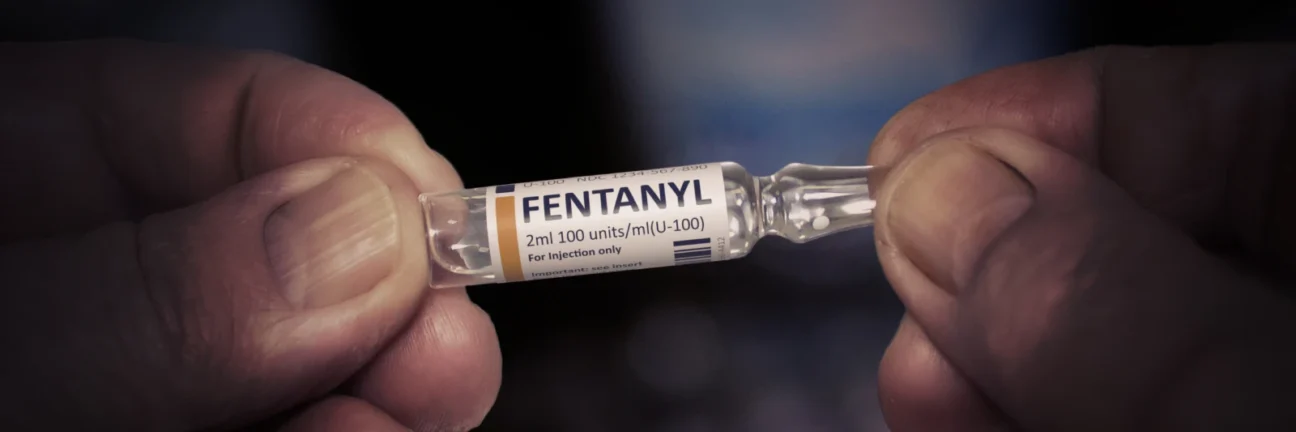

Fentanyl is a synthetic opioid 50-100 times stronger than morphine, which is why fentanyl is so dangerous. It is an opioid and is sometimes misused. Illegally made fentanyl is a major contributor to opioid overdose deaths in the United States.When fentanyl is added to heroin and/or other drugs, overdose potential is significantly increased.1
What is Fentanyl and How is it Used?
Fentanyl is a potent synthetic opioid drug. It is approved by the Food and Drug Administration for use as an analgesic (pain relief) and anesthetic. 1
It is classified as a Schedule II narcotic under the United States Controlled Substances Act of 1970. 1
Pharmaceutical fentanyl is used in anesthesia and to treat severe pain, including pain associated with advanced cancer.2 Anyone given a strong opioid while healing should understand the risk of painkiller addiction after surgery.
In What Forms is Fentanyl Taken?
Prescription fentanyl is available in several forms, including injections, transdermal patches and certain formulations that dissolve in the mouth or are administered through the nose. Brand names include Duragesic and Actiq.1
Fentanyl patches can be misused by removing their gel contents and then injecting the contents. Patches have a history of being frozen, cut into pieces, and then placed in the cheek cavity or under the tongue.
Illicit fentanyl cannot be reliably identified by appearance, taste or smell when it is mixed with other drugs. However, fentanyl test strips can be used to detect its presence in other substances.1,2 They may not always be 100% accurate, though.1,2
Why Are Drugs Cut with Fentanyl?
Since fentanyl has strong opioid properties, it is misused and overused. Unfortunately, fentanyl is produced and distributed through illegal drug markets.2
If this fentanyl is purchased and used, there is very little quality control which increases its overdose potential.2
Illicitly produced fentanyl is sold alone or combined with pharmaceutical drugs such as oxycodone. Dealers may also cut their drugs like heroin, Xanax, or prescription painkillers with fentanyl to make more money and increase potency. This can be deadly, especially for people who don’t realize they’re taking fentanyl.
Illegal fentanyl is being mixed with other drugs, such as:2,3
- Heroin
- Cocaine
- Methamphetamine
- 3,4-methylenedioxymethamphetamine (MDMA)
- Xanax
Fentanyl has been produced illicitly and has been identified in counterfeit pills that can mimic FDA-approved pharmaceutical drugs like oxycodone.2
Fentanyl is often cut in with other substances to induce severe highs, such as being spiked into blotter paper.2
What Are Fentanyl’s Street Names?
Fentanyl has many forms and street names. Its street names are as follows:1,2
- Apace
- Poison
- China White
- China Town
- China Girl
- Goodfellas
- Dance Fever
- Great Bear
- He-Man
- Tango & Cash
Fentanyl Side Effects
Fentanyl produces effects on the brain and creates bodily side effects.
Its mechanism of action is like that of other opioid drugs. Fentanyl molecules target opioid receptors in the body, most of which are in the brain. They can be found within specialized neuroanatomical structures that control emotions and pain.4
Fentanyl’s biochemical properties allow it to bind to the brain’s mu receptors because it is a mu-selective opioid agonist.4
It also can activate and impact other opioid system receptors like the delta receptors. Research is now showing it may also affect the kappa receptors as well.4
When these receptors are activated by fentanyl, it produces the side effect and feeling of analgesia.4
Furthermore, the neurotransmitter dopamine is increased in the brain, which leads to feelings of relaxation and exhilaration (excitement). 4
Some additional side effects include: 4
- Pain relief
- Euphoria
- Sedation
- Confusion
- Drowsiness
- Dizziness
- Nausea and vomiting
- Urinary retention
- Pupillary constriction
- Respiratory depression
What Are Fentanyl’s Bodily Effects?
Fentanyl is metabolized by the liver by the CYP450 enzyme. To be more specific, it is metabolized hepatically by the CYP3A4 enzyme and has a half-life of 3 to 7 hours, though this depends heavily on formulation and route of administration.4
It is primarily excreted both in the urine and feces, with 75% excretion happening through urination and 9% in the feces.4
Fentanyl severe side effects include:1,2,4
- Overdose
- Stupor
- Cyanosis
- Coma
- Cold and clammy skin
- Changes in pupillary size
- Respiratory failure leading to death
Risks of Fentanyl Use
Since fentanyl is significantly stronger than morphine, a dose of only 100 micrograms can produce equivalent analgesic effects to about 10 mg of morphine. 1,2,4
Per the National Institute on Drug Abuse, the U.S. government does not track death rates for every drug, but the National Center for Health Statistics (NCHS) at the Centers for Disease Control and Prevention tracks overdose deaths involving the most commonly used drugs.5
Drug overdose deaths rose steadily through 2022 before beginning to decline. In 2023, roughly 105,000 people in the U.S. died from a drug overdose, and about 69% of those deaths involved synthetic opioids—primarily illegally made fentanyl.5
Provisional CDC data for 2024 show a sharp drop to an estimated 80,000 overdose deaths, a nearly 27% decline from 2023, with the steepest decrease among synthetic-opioid deaths. Even with this decline, fentanyl remains the leading driver of overdose deaths in the United States.5
Why is Fentanyl so Deadly?
Fentanyl is deadly due to its severe potency. It affects systems such as the pulmonary system and brain function, causing breathing to slow or stop altogether.4,6
What Are Fentanyl’s Effects on the Pulmonary System?
The effects of fentanyl on the respiratory system include direct inhibition of respiratory neural activity. In an overdose, breathing may become slow, shallow or stop altogether, depriving the brain and other organs of oxygen.
In other words, fentanyl lowers the responsiveness to the stimulatory effects of carbon dioxide on the human body, negatively impacting your breathing.6
At high doses, particularly with rapid intravenous administration, fentanyl can cause chest wall rigidity that can make ventilation difficult.6
How Does Fentanyl Impact Brain Function?
Fentanyl works by binding to the body’s opioid receptors. These are found in areas of the brain in charge of controlling pain and emotions.4
Since fentanyl is an analgesic and opioid, it is a central nervous system (CNS) depressant. As a result, when it is misused and/or overused, you run the risk of experiencing:1,2,4
- Respiratory depression
- Respiratory arrest
- Unconsciousness
- Coma
- Death
These symptoms are on the severe side and typically occur during an overdose.4
Also, the presence of a triad of symptoms consisting of pinpoint pupils, coma, and respiratory depression are strongly suggestive of opioid poisoning. If you witness someone who may have overdosed, administer naloxone (Narcan) if you have it and contact emergency medical services (EMS).4
Common effects can include pain relief, euphoria, drowsiness, nausea, dizziness and constricted pupils.1,2,4
There are more potent synthetics than fentanyl, such as carfentanil. Fentanyl test strips can detect fentanyl in some drug samples, but they cannot tell you how much fentanyl is present and may not detect some fentanyl analogs.7,8
Fentanyl Potency: Overdose Risk and Signs
Fentanyl comes in a variety of forms and in high doses.8
Because drugs are often cut with fentanyl, unbeknownst to the user, they may use a drug believing it to be MDMA or heroin and end up overdosing on fentanyl.
The fact that it is tasteless can also cause no deterrence towards taking more of it than intended. For example, there is no taste aversion happening for you, so you continue to take in more.8
Fentanyl potency (especially if a transdermal patch is cut open and its contents are either injected or placed in your mouth under the check) is very high and can reach your CNS, pulmonary, and other bodily systems rapidly.4,8
All of these reasons can lead to the following major signs and symptoms of overdose:1,2,4,8
- Pinpoint pupils
- Coma
- Respiratory depression
Fentanyl Withdrawal, Dependence, and Addiction
Repeated fentanyl use can lead to tolerance, physical dependence and opioid use disorder. An overdose is a sign of potentially dangerous opioid exposure and substantially increases the risk of death from future overdose.8
When fentanyl is unexpectedly present in another drug, a person may unknowingly take a much higher opioid dose than intended, increasing the risk of overdose.8
Naloxone is a medicine that can be given to you to reverse a fentanyl overdose. Multiple naloxone doses might be necessary because of fentanyl potency.8
If you have overdosed and emergency medical providers utilize medication such as naloxone to revive you, it may give you a false sense of security. For example, cognitively, your thoughts may tell you it is ok to overdose since paramedics or other bystanders may be able to quickly revive you with Narcan.8
Some withdrawal symptoms of fentanyl are also unpleasant. If you go to a medically managed detox, credentialed professionals can give you prescription medications to lower the effects. Fentanyl withdrawal can be extremely uncomfortable, which can make it difficult for some people to stop using without treatment and support.8
Fentanyl withdrawal symptoms include:8
- Anxiety
- Dizziness
- Nausea
- Fever
- Vomiting
- Runny nose
- Irritability
- Muscle or joint aches
- Dilated pupils
- Heavy sweating
- Trouble sleeping
- Goosebumps and chills
- Abdominal cramps
- Increased breathing rate
If you or a loved one feel the treatment is the right fit or you’re unsure of where to start, contact a treatment specialist at
800-914-7089
( Sponsored)
.
Sponsored)
.
Resources
- Department of Justice/Drug Enforcement Administration Drug Fact Sheet. (2020, April). Fentanyl.
- United States Drug Enforcement Administration. (n.d.). Fentanyl.
- National Institute on Drug Abuse (NIDA). (2017, September). What is MDMA?
- Ramos-Matos, C.F., Bistas, K.G., & Lopez-Ojeda, W. (2022). StatPearls. Fentanyl.
- National Institute on Drug Abuse (NIDA). (2022, Jan 20). Overdose Death Rates.
- Kiyatkin E. A. (2019). Respiratory Depression and Brain Hypoxia Induced by Opioid Drugs: Morphine, Oxycodone, Heroin, and Fentanyl. Neuropharmacology, 151, 219–226.
- Drug Enforcement Administration. (n.d.) Carfentanil: A Dangerous New Factor in the U.S. Opioid Crisis.
- National Institute on Drug Abuse (NIDA). (2021, June). Fentanyl Drug Facts.
